
My experience in Air Force Junior ROTC became the defining part of my high school years. I initially joined because a close friend thought it would be a way for us to find a community and make a name for ourselves. I was drawn to the discipline, the friendships, and the possibility of taking on leadership responsibilities. When I convinced my parents to let me enroll, I hoped I might help lead the cadet corps by my senior year. I did not expect that opportunity to arrive much sooner.
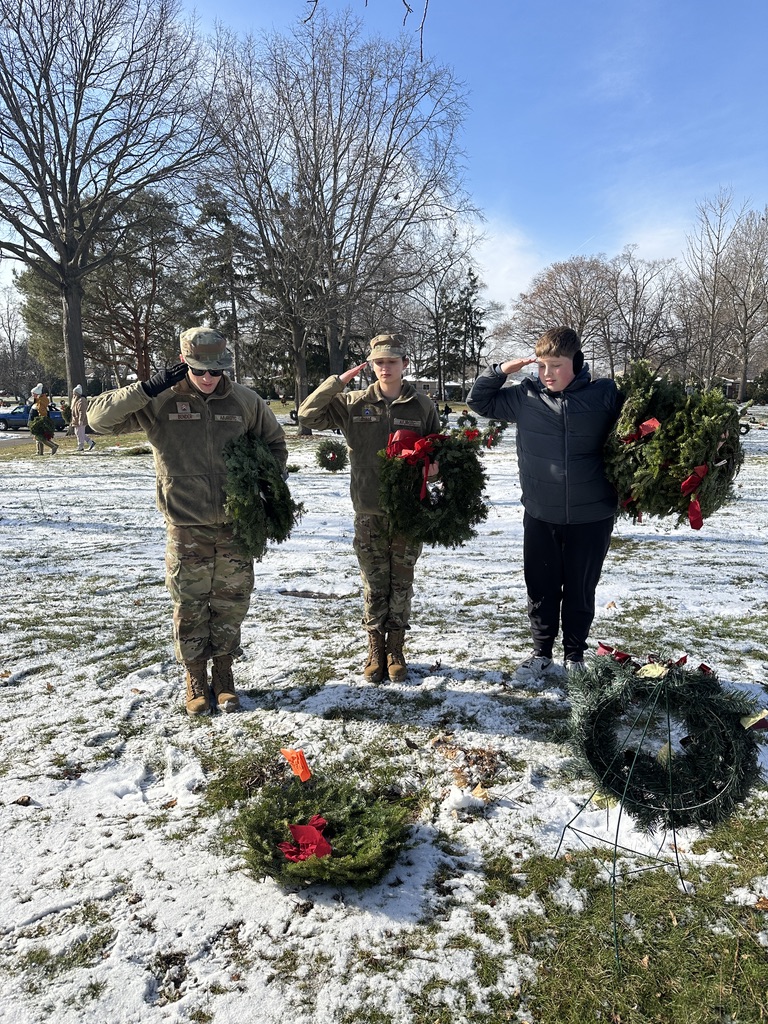
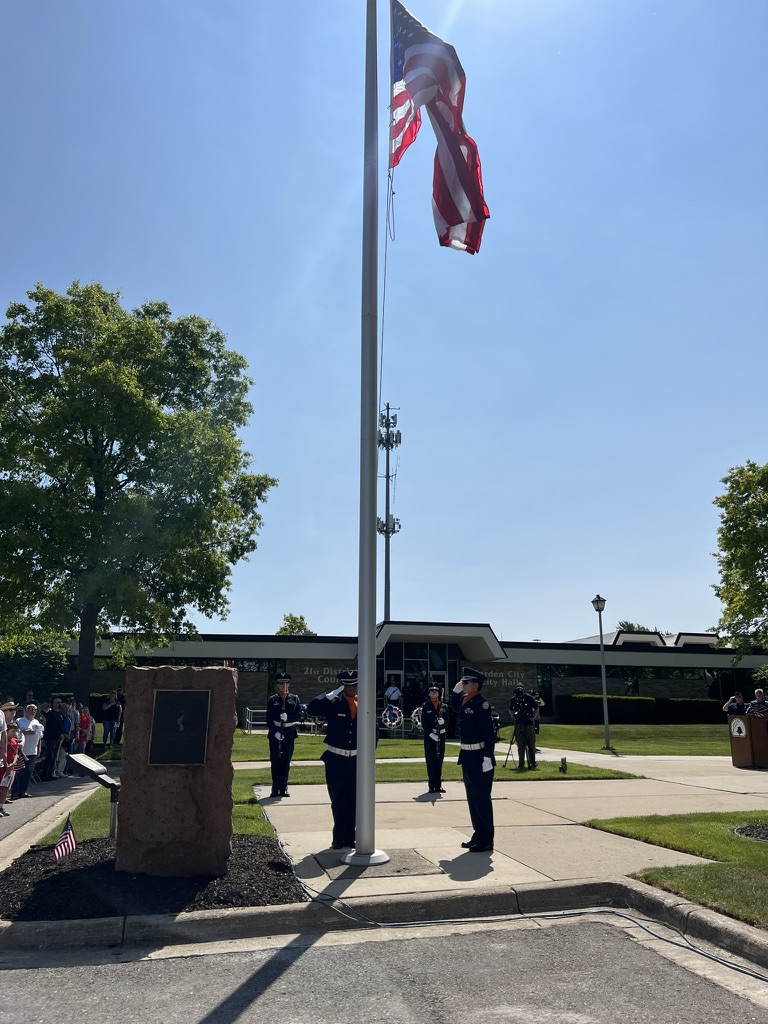
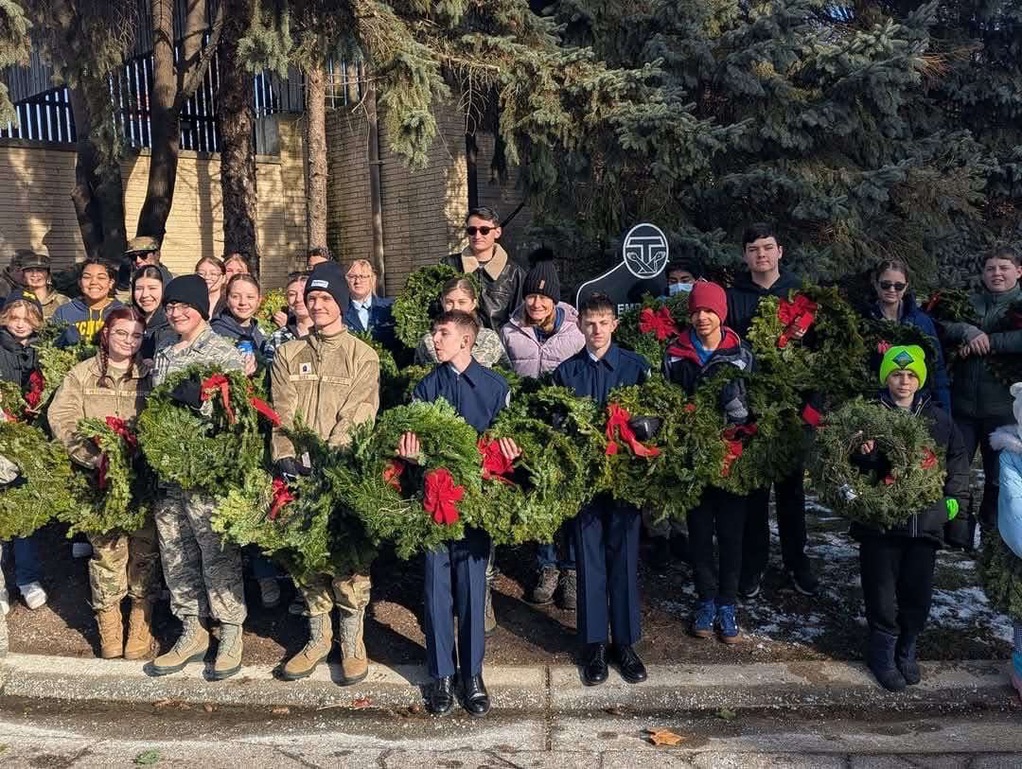
The program quickly became a home for me. The colonel and sergeant who taught us became mentors, and many of my closest friendships grew through the corps. Community service gave those relationships a shared purpose. I helped maintain the school garden, welcomed guests at school plays, cleaned local highways, and volunteered at the American Legion. We also participated in memorial services and laid wreaths at local cemeteries. Through these experiences, I began to understand how much a group of students could contribute to the community around them.
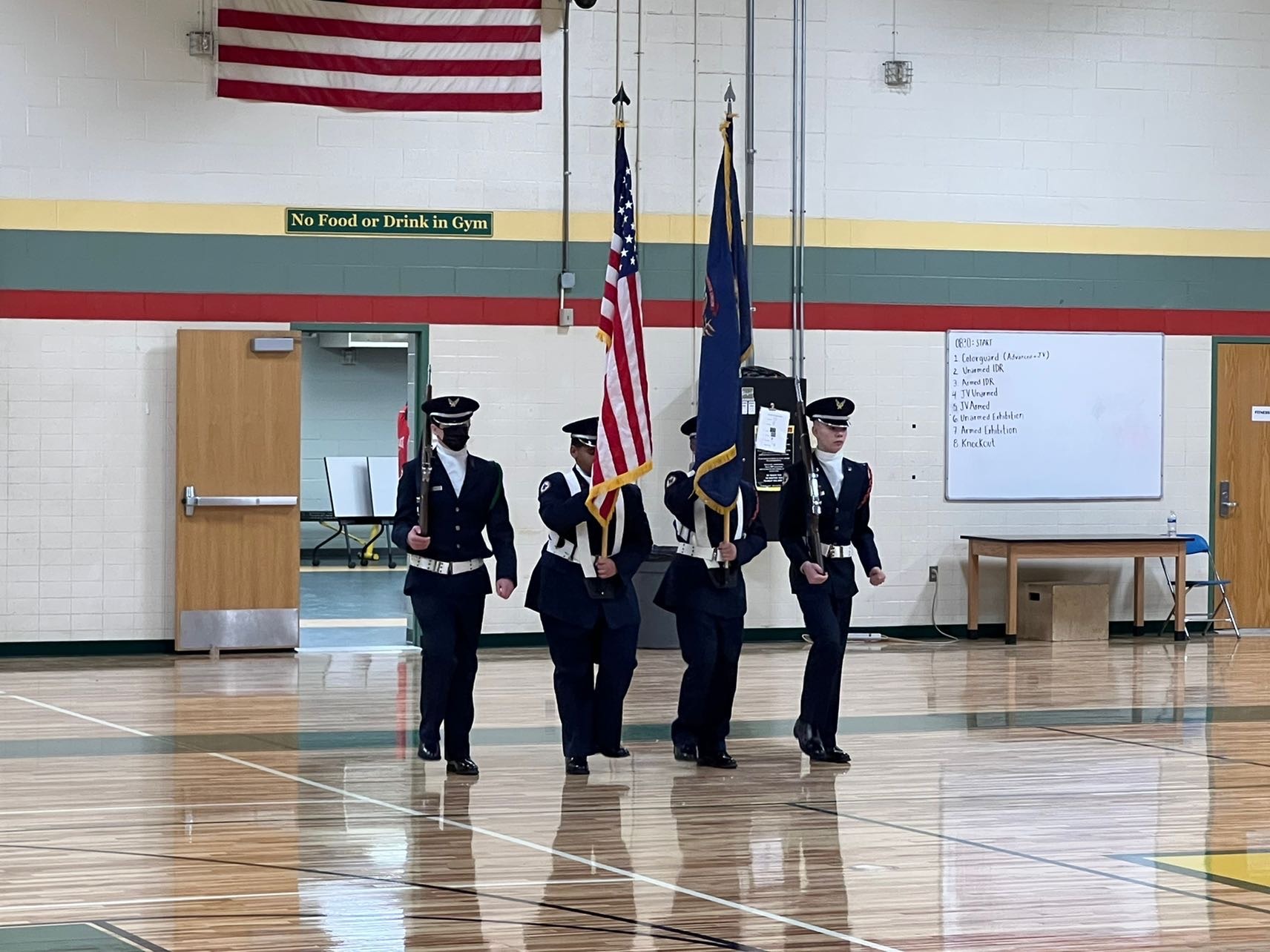
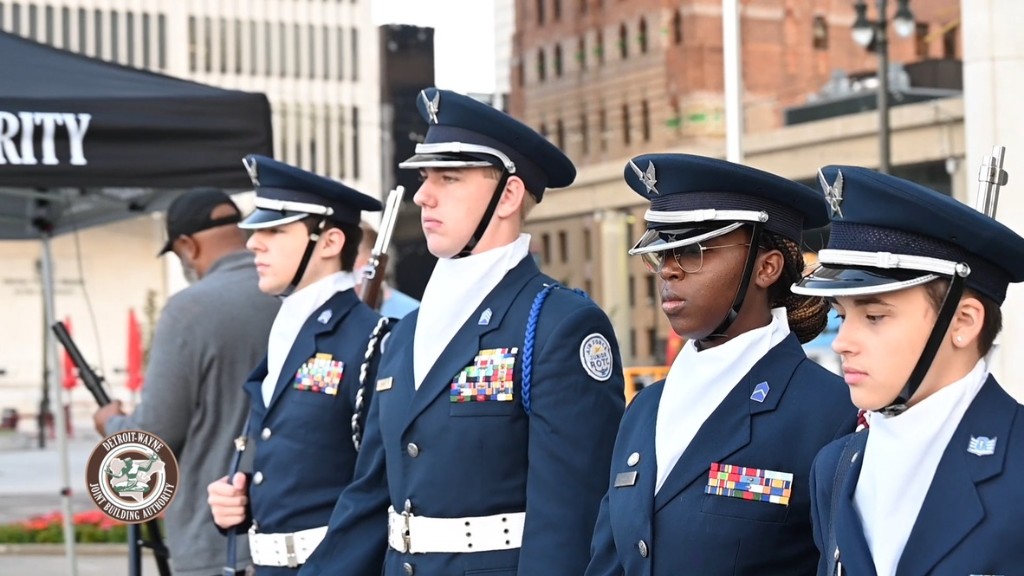
Joining the drill team added another kind of responsibility. We practiced from six to seven each morning before school. On uniform days, I sometimes woke at four-thirty to prepare my dress blues. Every detail mattered, from the condition of the uniform to the precision of our movements. As I progressed to leading routines and serving on the color guard, I learned how much a performance depended on everyone arriving prepared and trusting one another. Presenting the colors for the Air Force birthday at Detroit’s Coleman A. Young Municipal Center was a particularly memorable opportunity to represent our unit beyond the school.
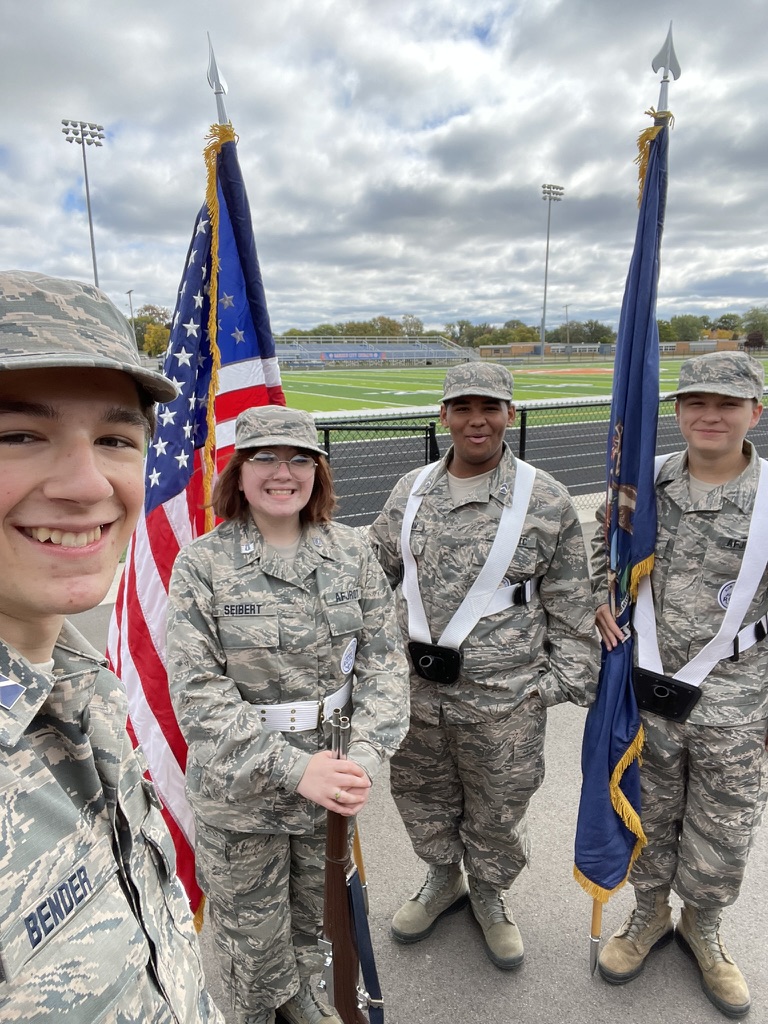
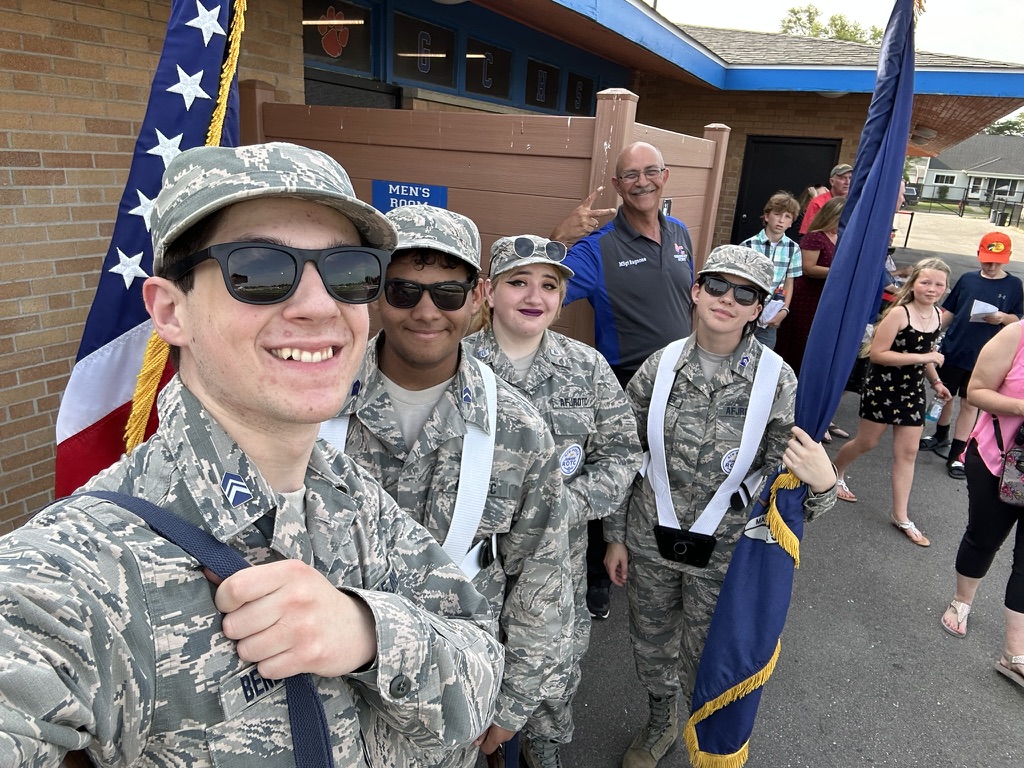
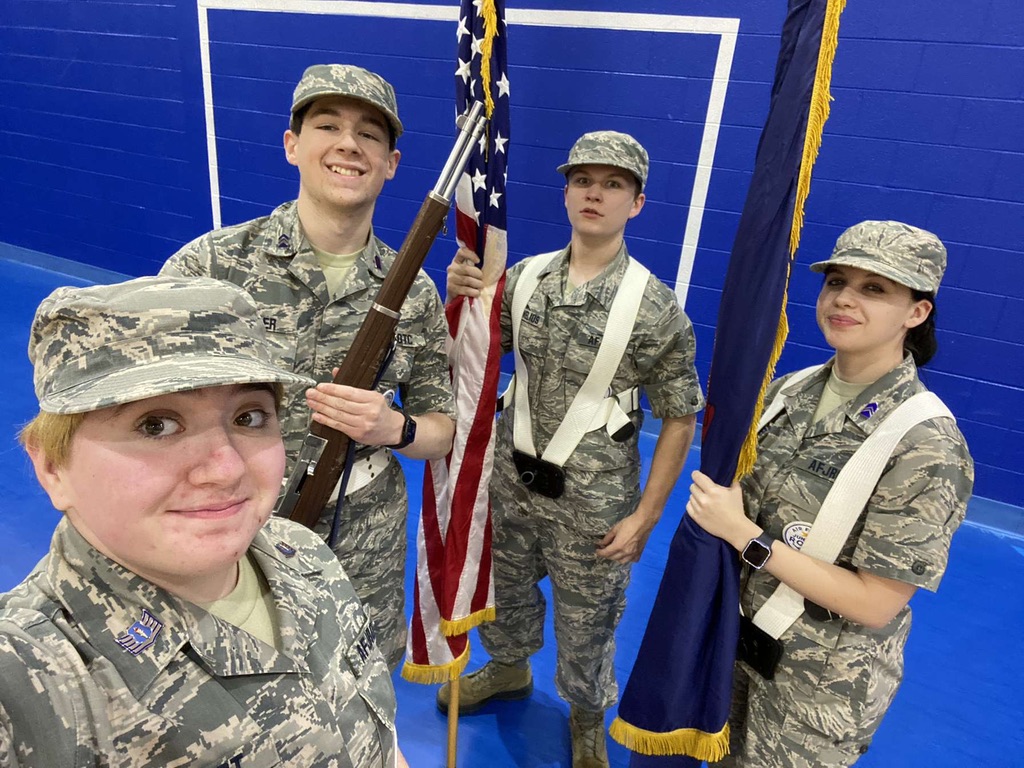
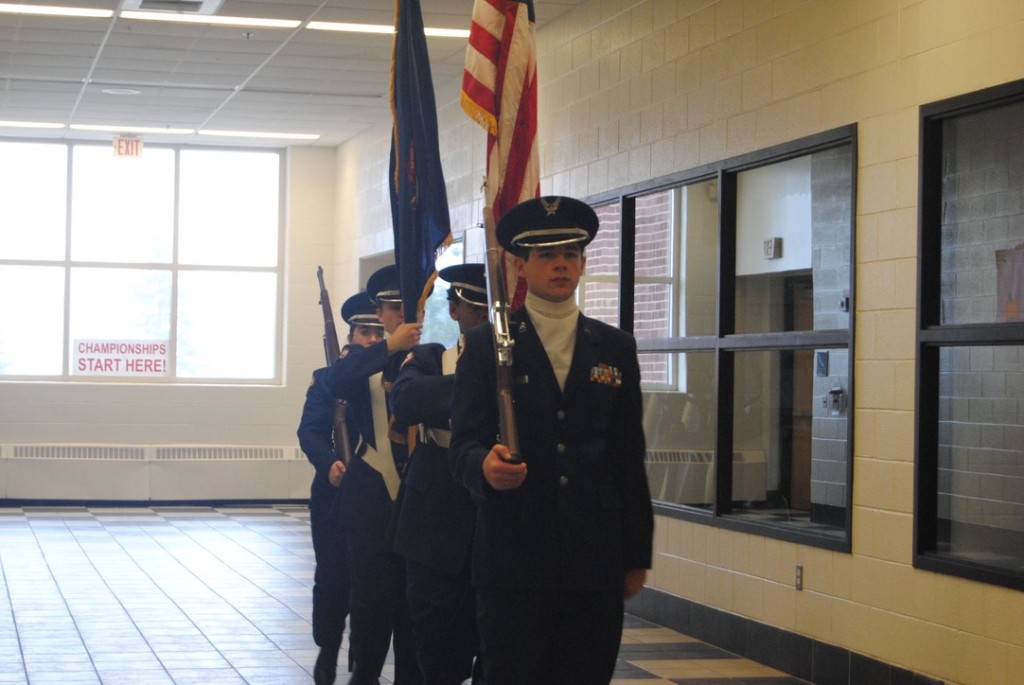
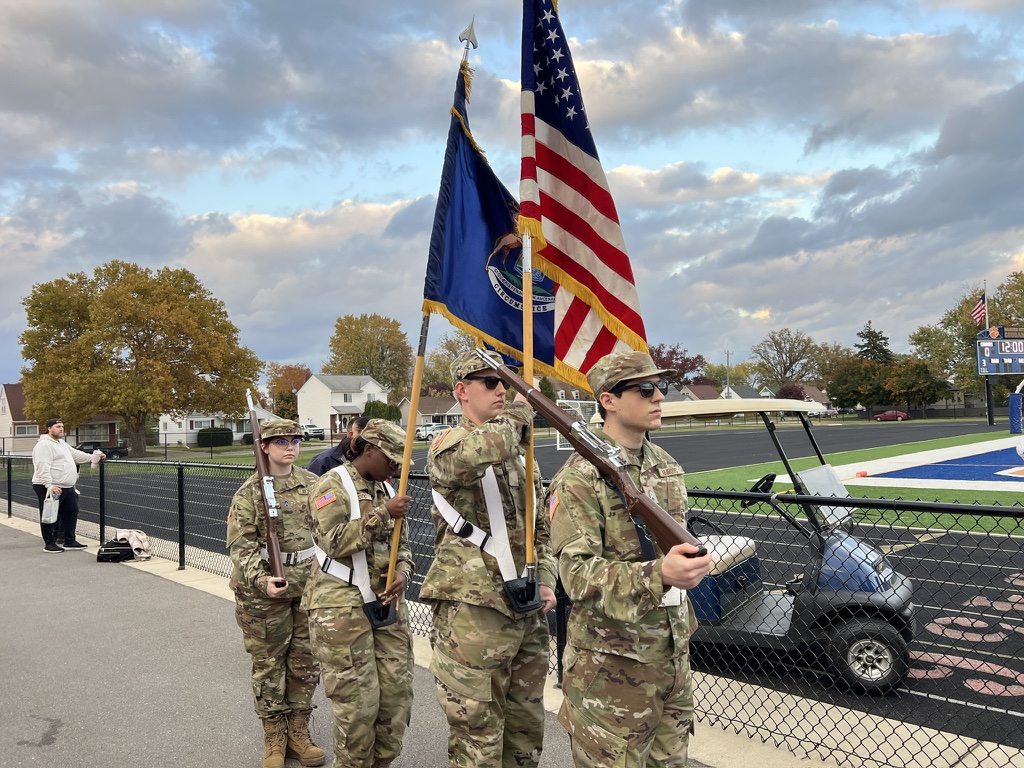
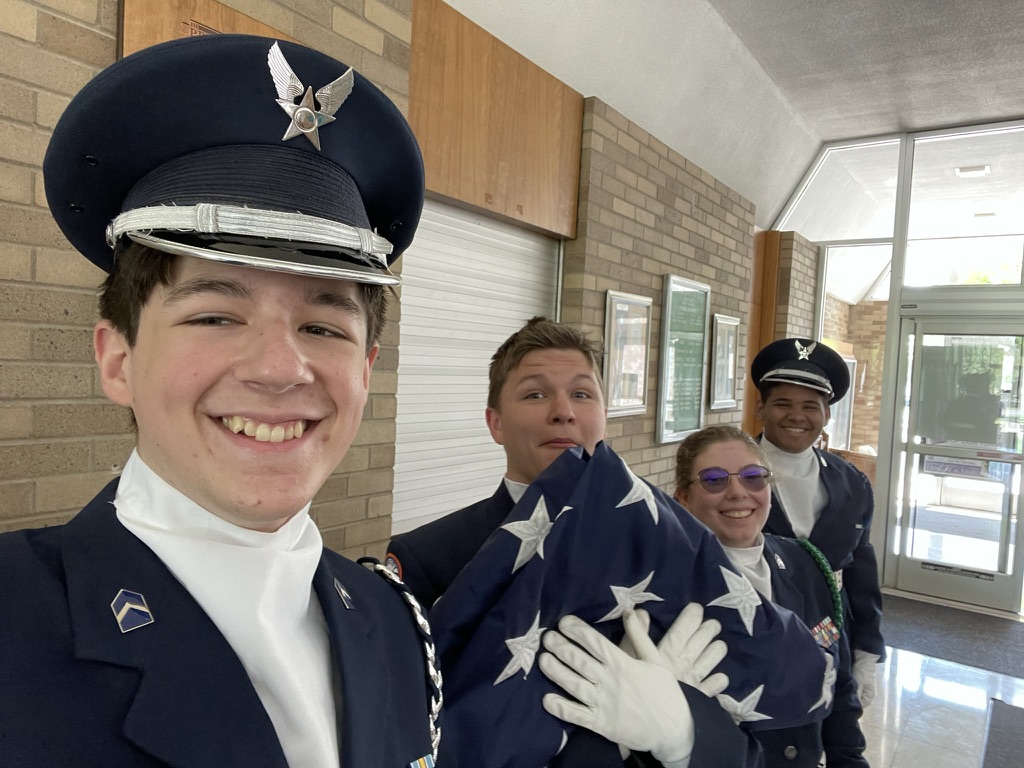
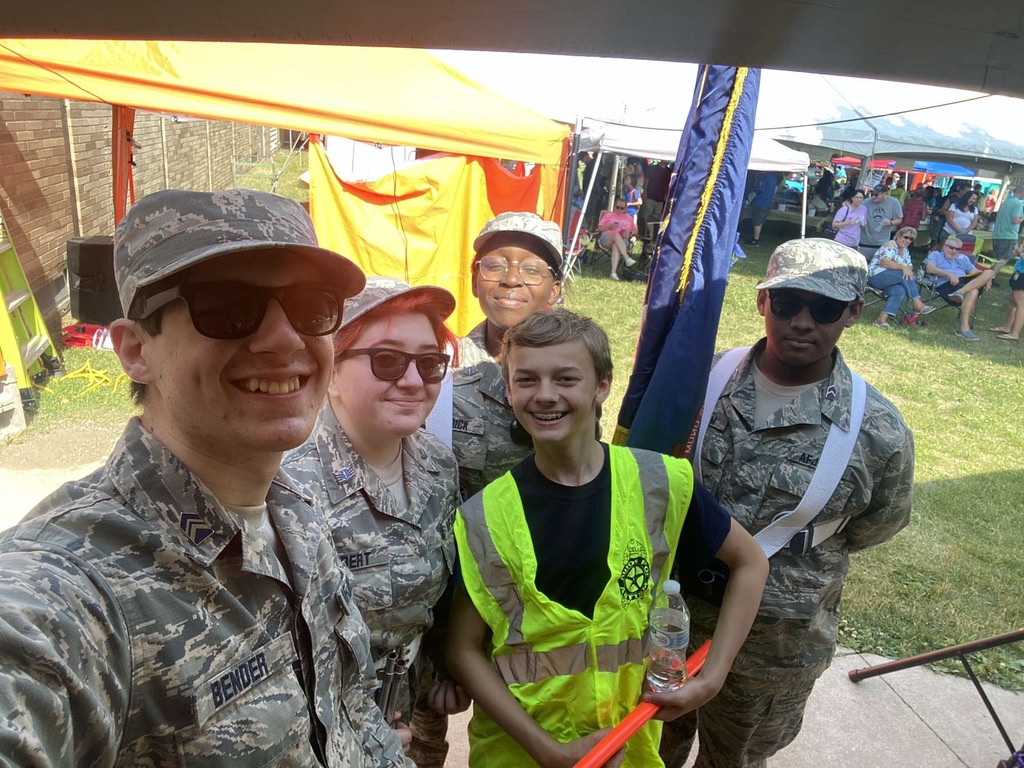
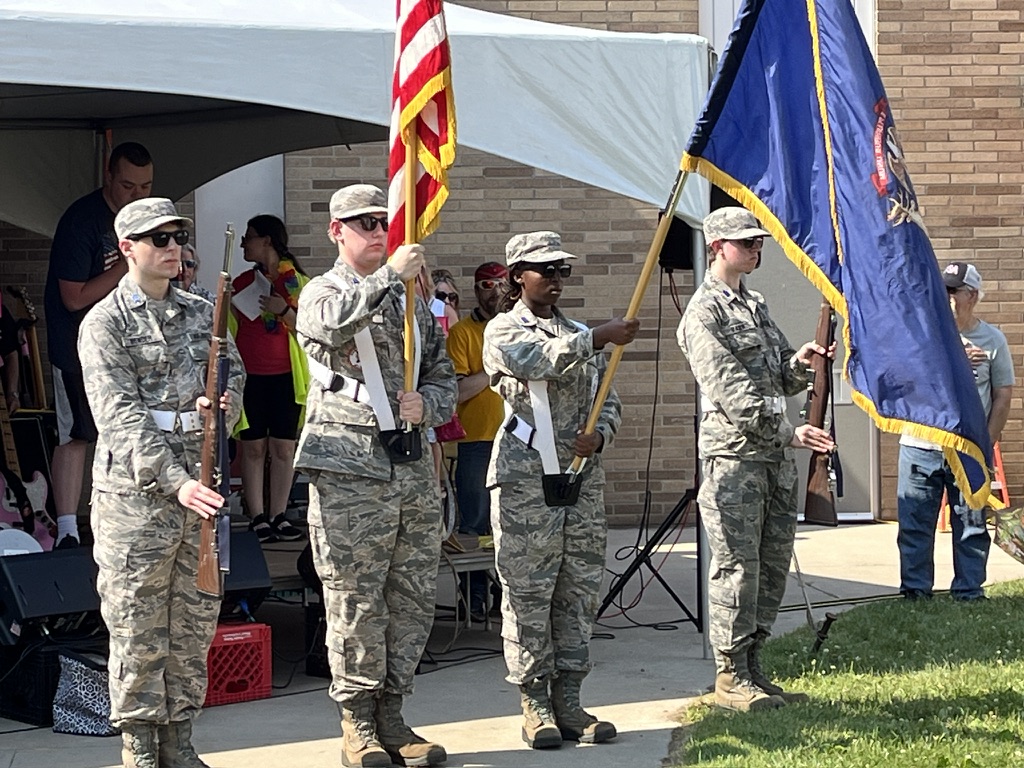
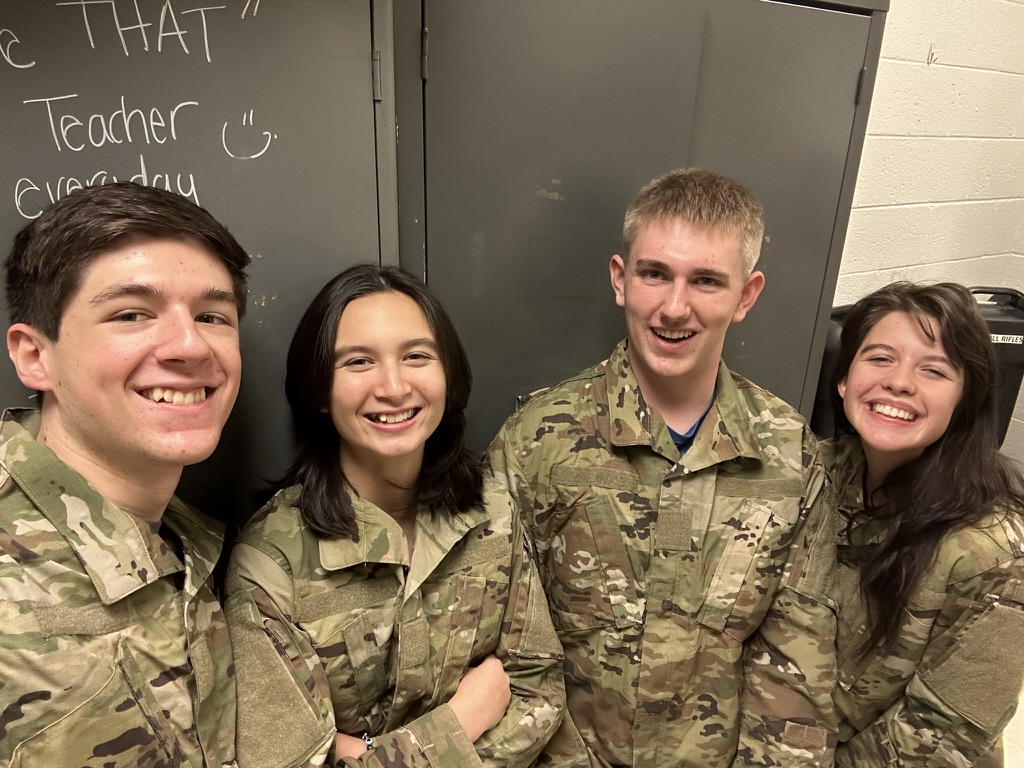
On November 7, 2023, our unit retired the ABU pattern and moved into OCPs.
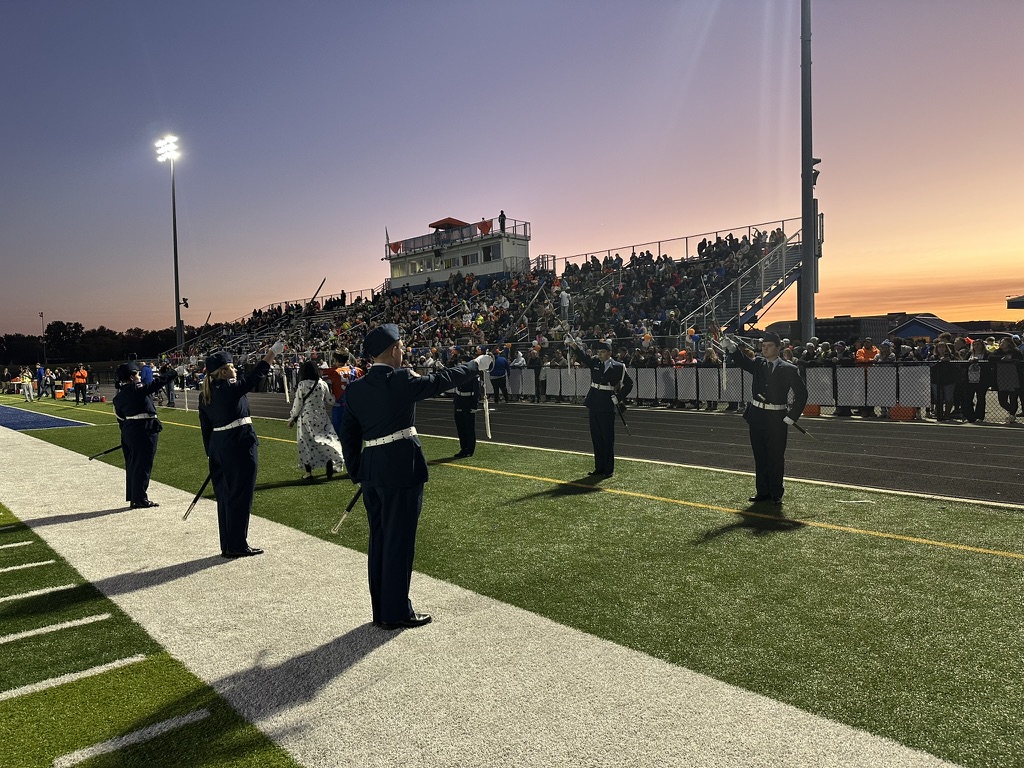
After I learned the Air Force saber manual, we started MI-861’s first saber team.
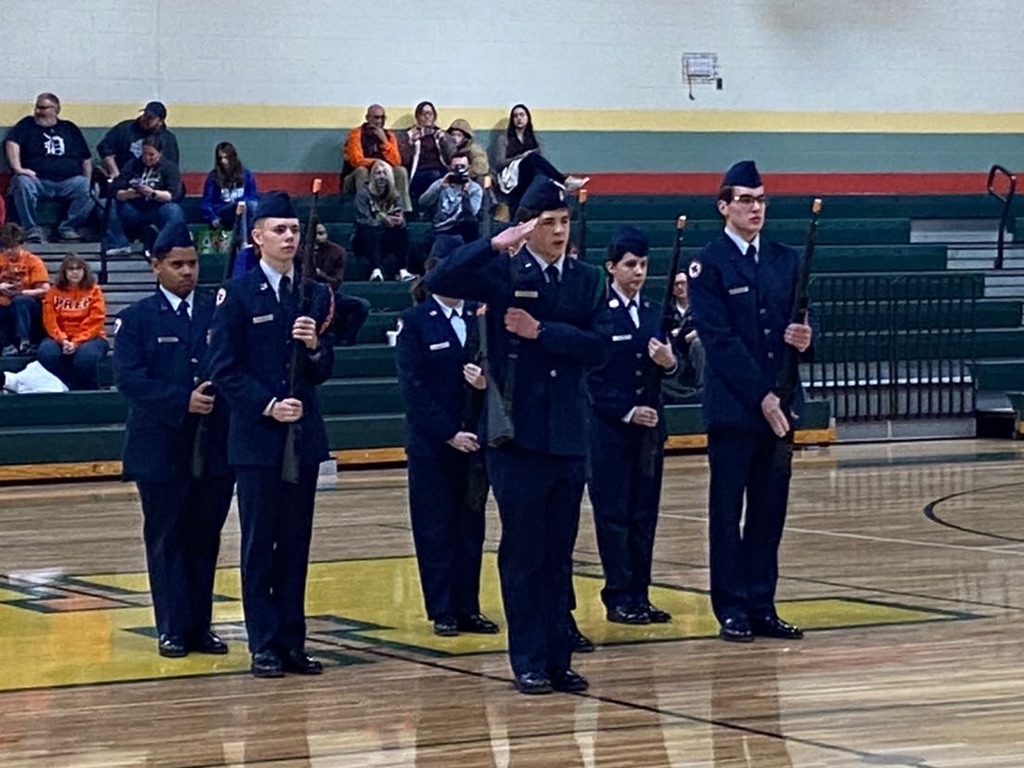
I came back in February 2026 to lead the unit’s JV Armed Regulation team for the first time.
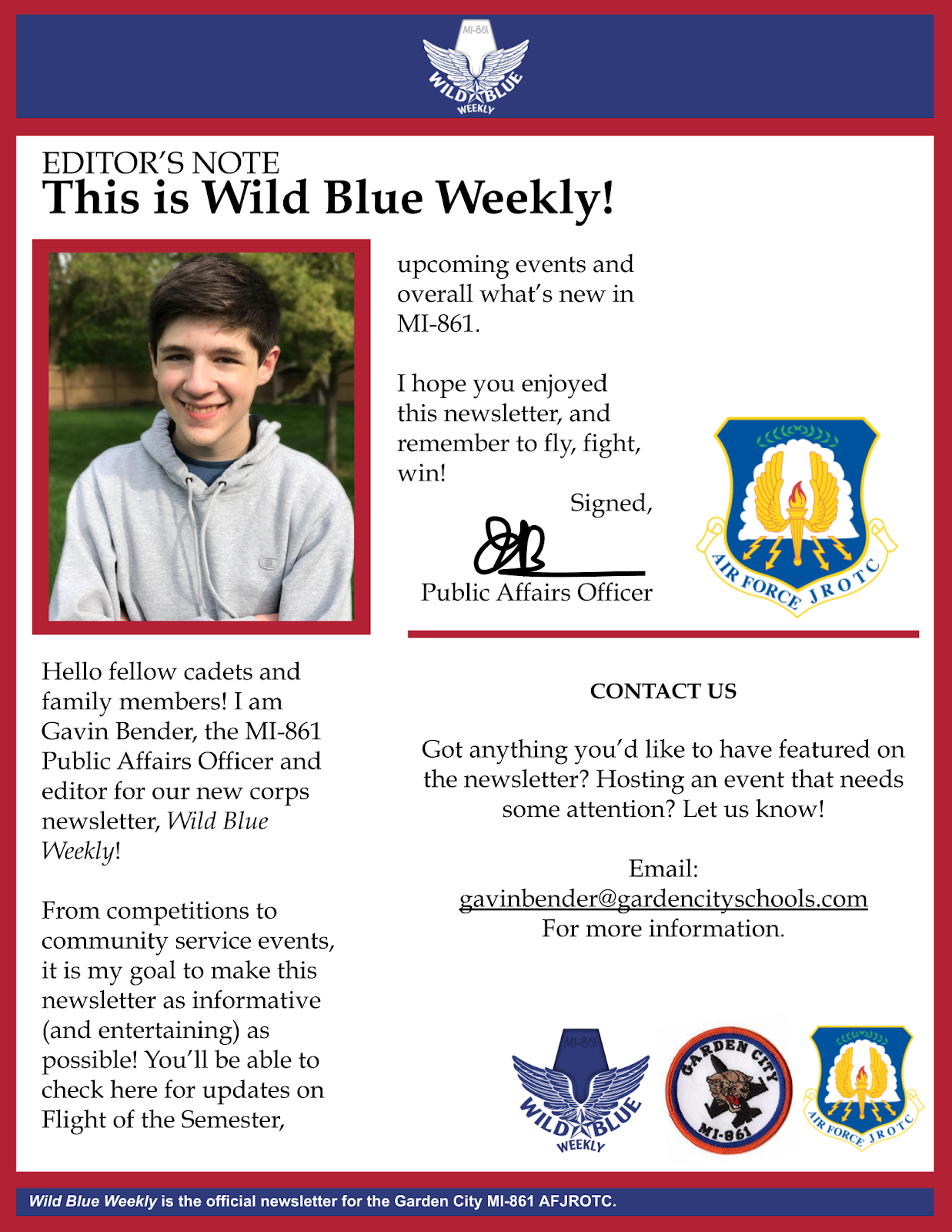
My first formal staff application was for public affairs officer. At the end of the application, I added a statement explaining how I hoped to improve communication with parents, encourage participation, and support recruitment. Receiving an interview and then the position taught me the value of communicating what I wanted to contribute. Once selected, I wanted to follow through on the ideas I had proposed.
I created Wild Blue Weekly, a newsletter I designed in Photoshop. It included recent photos, stories about our service projects, upcoming events, and recognition of our flights, the class groups within our unit. I also invited cadets to submit their own stories. Producing the newsletter taught me to think about communication from the reader’s perspective: what information would help someone participate, understand what we were doing, or feel that their contribution mattered?
That work led to greater responsibility in recruitment and eventually to becoming support squadron commander. I oversaw academics, logistics, physical training, and personnel. My goal was to help each officer develop their position with the same initiative I had brought to mine. We used cadet feedback to shape physical training activities, created additional opportunities to prepare for fitness assessments, and supported logistics with a team of representatives. We also worked on spreadsheets and Google Forms to make personnel records easier to manage. In academics, we created new study guides and practice Kahoots to help cadets prepare for their aerospace science courses.
I also began advocating for recognition of other cadets’ work. As drill commander, I wrote a proposal asking the school to award varsity letters to qualifying drill-team members. I documented our competition results and proposed standards for attendance, performance, and conduct. Some seniors had devoted years to the team, and I wanted their commitment to receive formal recognition. Preparing that proposal helped me practice making a clear, evidence-based case on behalf of others.
Near the end of my freshman year, the colonel called me into the office. Our corps commander was graduating, and the conversation soon began to feel like an interview. I was asked how I would improve the unit, and I shared my ideas. Then the colonel slid an organizational chart across the desk and asked me to return the next day with recommendations for the staff positions. The chart was mostly blank, but my name was already written at the top, beside “Corps Commander.”
I was suddenly responsible for helping lead over eighty cadets, many of whom were older than I was. Listening became essential. I met with the people I would be leading to understand what they valued about the program and what they wanted to improve. We were emerging from the disruption of COVID-19, and rebuilding participation and connection was a major concern. Those conversations shaped my plans and helped me earn trust as a younger leader.
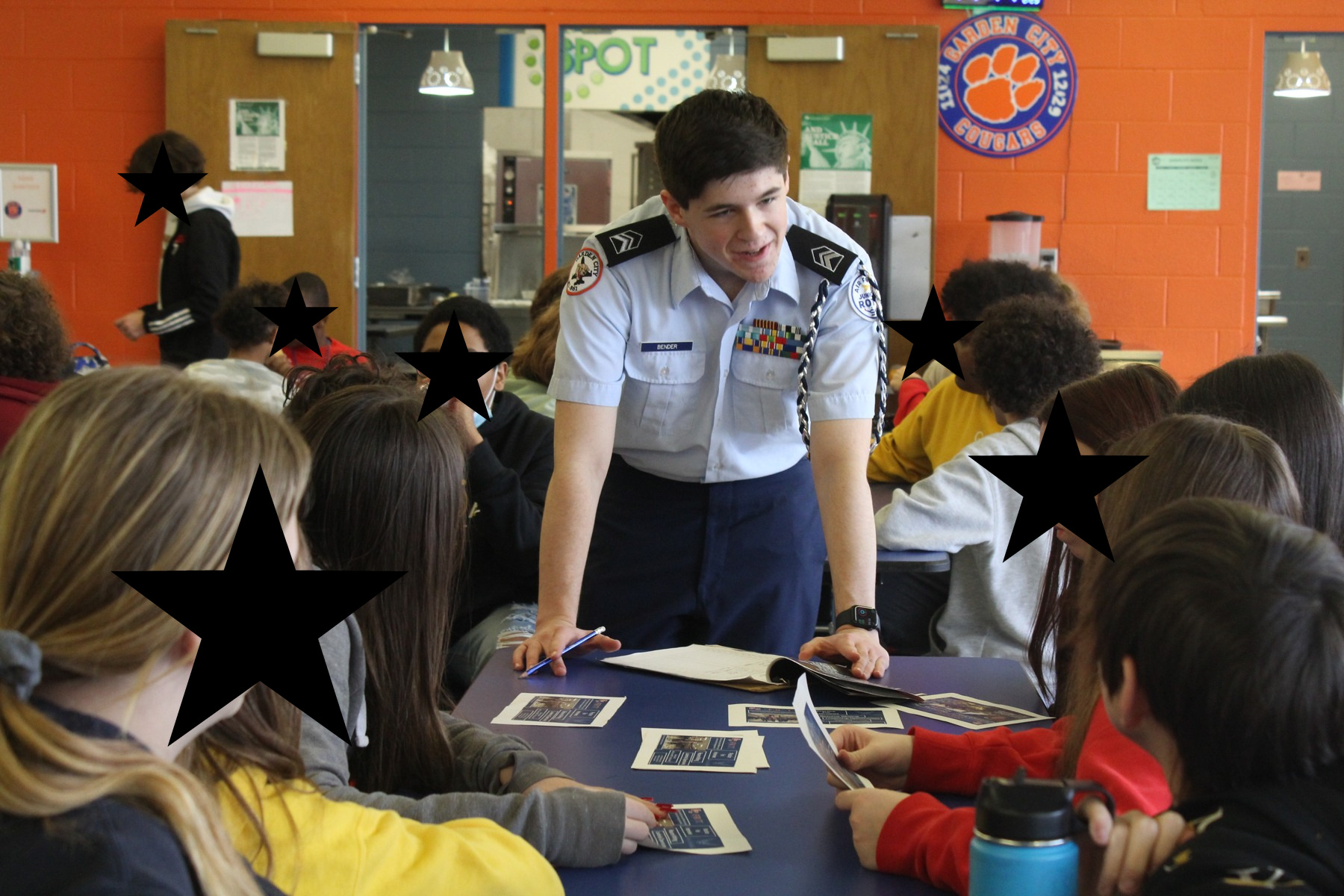
Recruitment gave me an opportunity to help other students find the community that had meant so much to me. In February 2023, our recruiting team visited Garden City Middle School with a presentation, a cadet-created video, and a paper airplane contest. We returned during lunch the following week to share pamphlets, answer questions, and host an arm-wrestling tournament. The outreach generated ninety-four sign-ups from interested students. For me, the experience highlighted the value of making a program approachable. A shared activity could open a conversation, while cadets’ own stories could help prospective students picture themselves in the corps.
That spring I was also part of the Kitty Hawk Honor Society, our organization for high-achieving cadets.
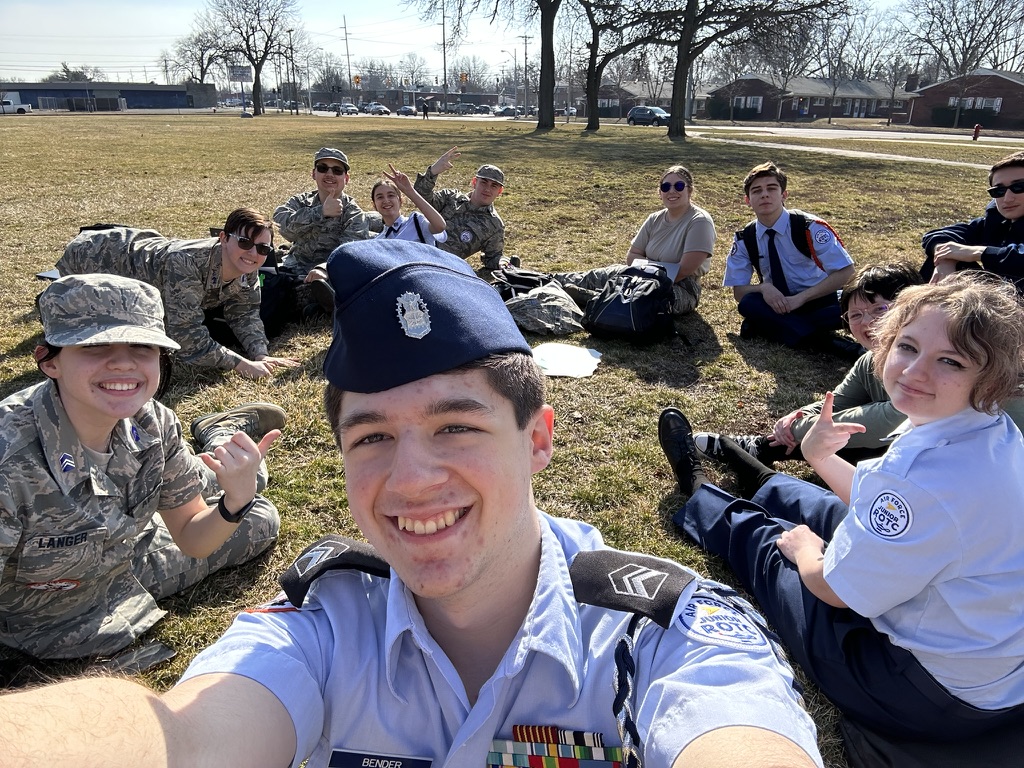
Recruiting also taught me that assigning responsibility was only the beginning of mentoring. We were encourarged to document and reflect in the Corps, and in one reflection, I found that our recruiting was at risk of falling behind schedule: While leading as commander, it became difficult to provide enough guidance to my recruiting team. Taking over tasks would limit another cadet’s opportunity to learn, but expecting initiative without enough support created its own problems. I had to examine my part in that balance and find a way to cvreate a more scalable management process.
I introduced a shared reminder system that notified us when tasks were added or deadlines approached, which helped us coordinate. I also proposed regular meetings with our instructor and recruiting assistant to make guidance more consistent. That reflection helped me see delegation as an ongoing responsibility: setting clear expectations, following up, and making space for questions. It also taught me how to lead groups whose focus spanned beyond my own expertise. By creating an environemnt where communication was transparent, I could help others develop into leaders that could contribute independently.
Throughout my time in JROTC, service gave our work a broader purpose. I founded a fundraiser supporting the Red Cross’s humanitarian work in Ukraine. We sold ribbons, collected donations, and worked with the school on a fundraiser that allowed students to wear hats in exchange for a contribution. I continued our relationship with the American Legion and expanded opportunities for cadets to serve and represent the unit. Trips to Washington, D.C., the Naval Academy in Annapolis, and the University of Michigan, along with leadership-camp opportunities, helped students see beyond their everyday school experience.
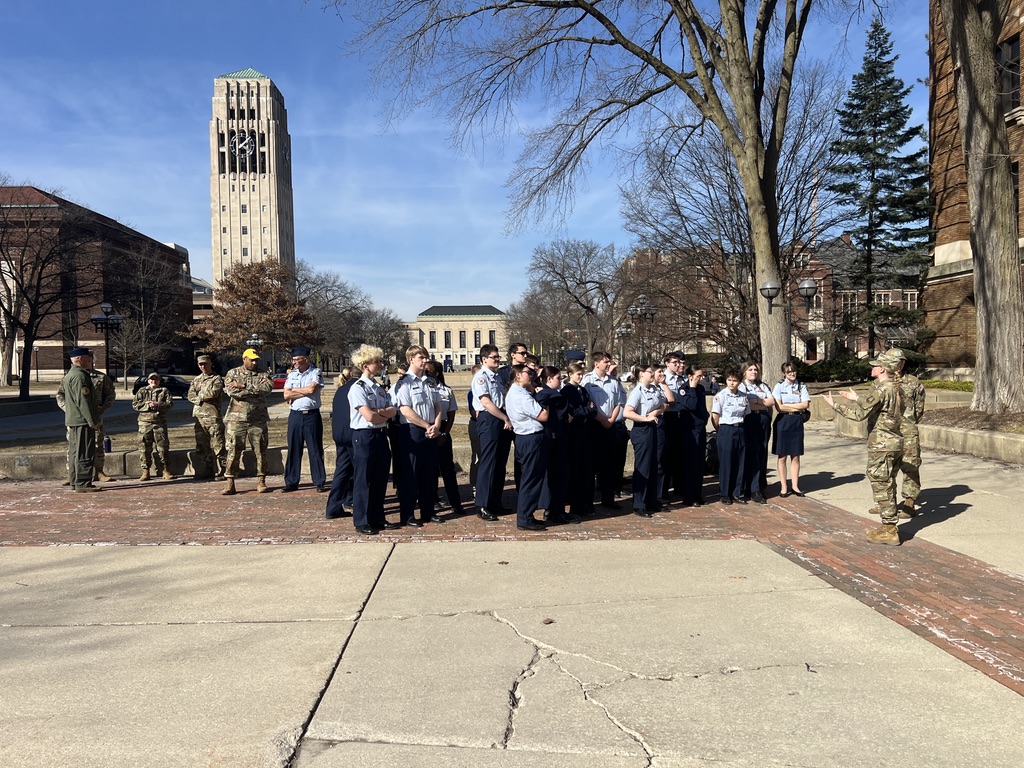
In March 2025, I reached out to AFROTC at the University of Michigan, and coordinated a trip for cadets interested in higher education.

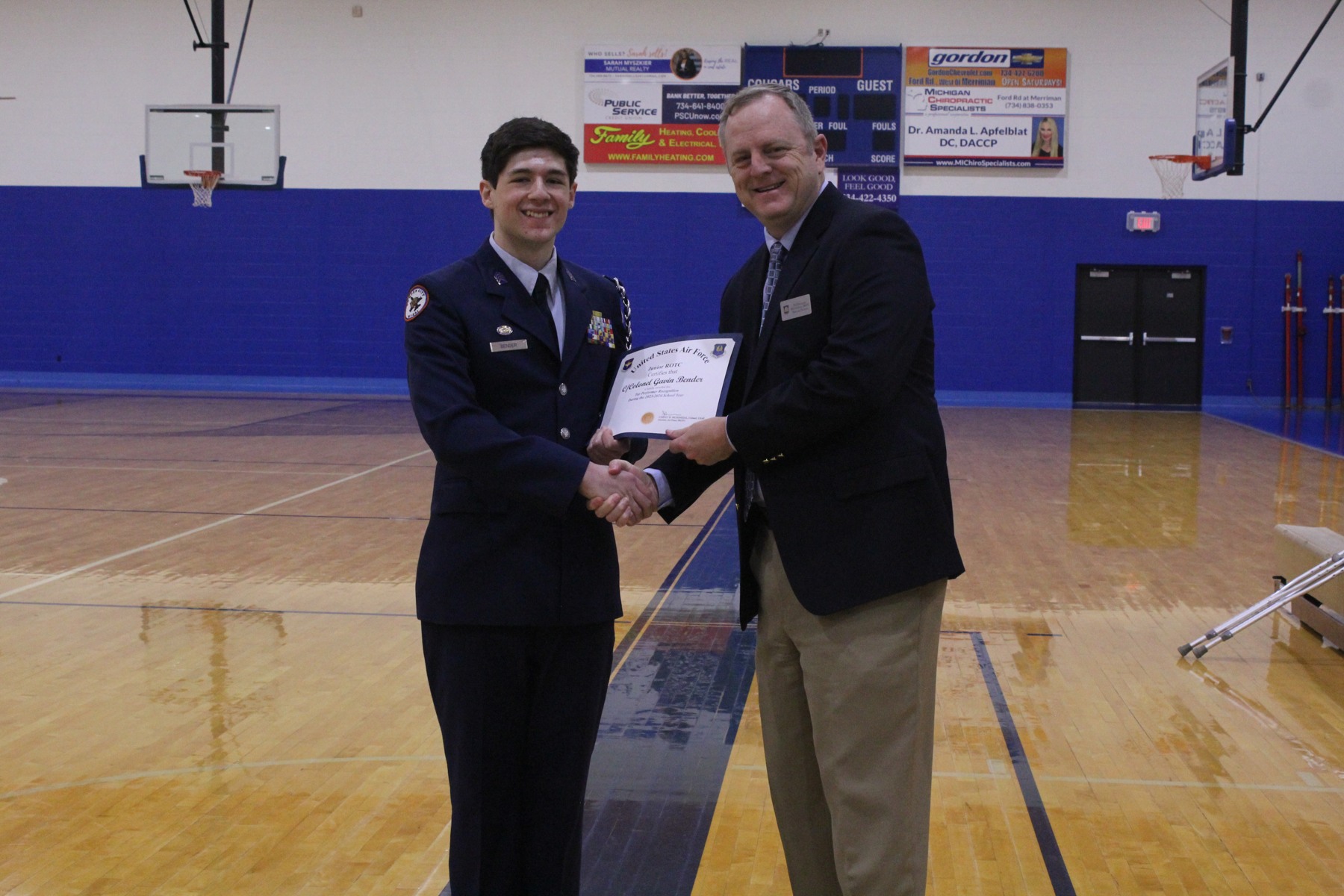
Our work culminated in a headquarters inspection rated “Exceeds Standards,”, the highest-possible rating. For our efforts, the corps earned the prestigious Distinguished Unit Award with Merit award. I was proud of what that recognition represented: many students contributing consistently to something we had built together. Being recognized for my own leadership alongside the friend who had first encouraged me to join made the experience especially meaningful. We had both grown through the program and helped shape it for others.
Preparing others to lead also meant putting useful knowledge into a form they could return to. As public affairs officer, I had written a Google Drive troubleshooting guide covering missed notifications, misplaced messages, and cluttered inboxes. Our digital-conduct guidance addressed clear email subjects, putting the main point first, organizing shared files, and managing access. These everyday details mattered because participation depended on people being able to find and understand information. Writing the guide helped me think beyond answering one person’s question: I wanted to leave a resource that future cadets could use independently. That became another part of how I understood leadership and continuity.
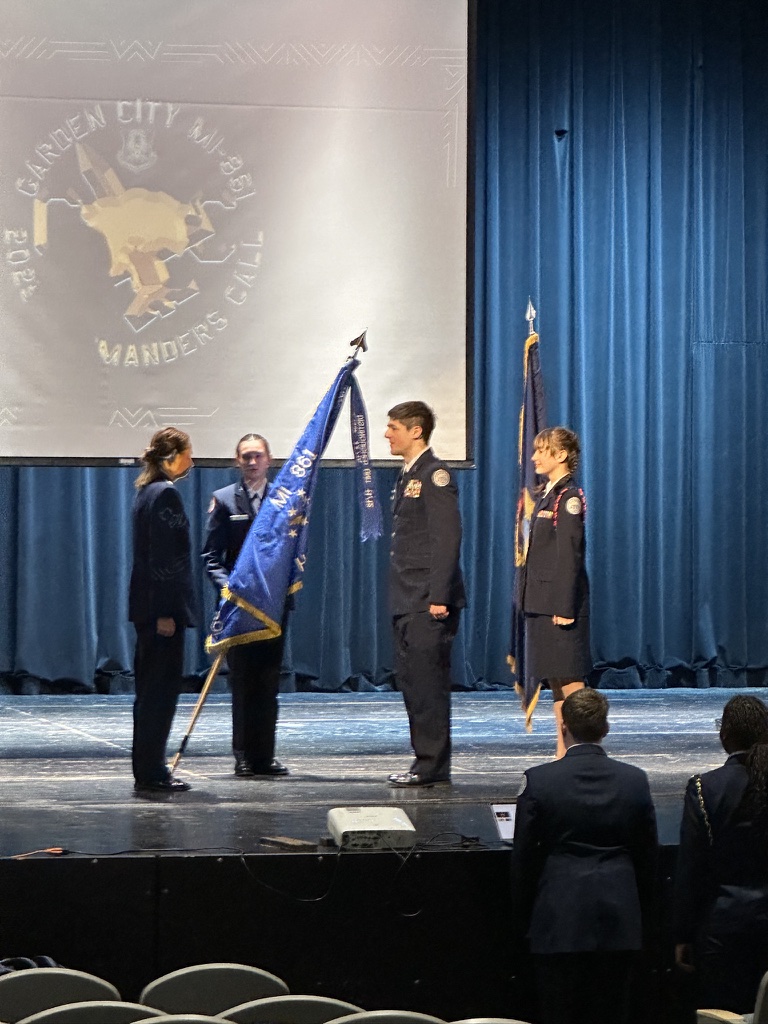
During my senior year, I prepared to pass command to my successor. I organized a Commander’s Call that brought the corps together to recognize achievements, reflect on our progress, and hear the new commander’s plans. A video produced by our new Public Affairs officer captured the experiences behind the awards and service projects. The event’s recap recognized more than eight hundred hours of community service and nearly $4,900 raised for charitable causes across the corps. Celebrating that collective work made the handoff feel like a shared step forward. I then moved into the role of special assistant to the Senior Aerospace Science Instructor, continuing to support the unit while giving its new leadership room to grow.
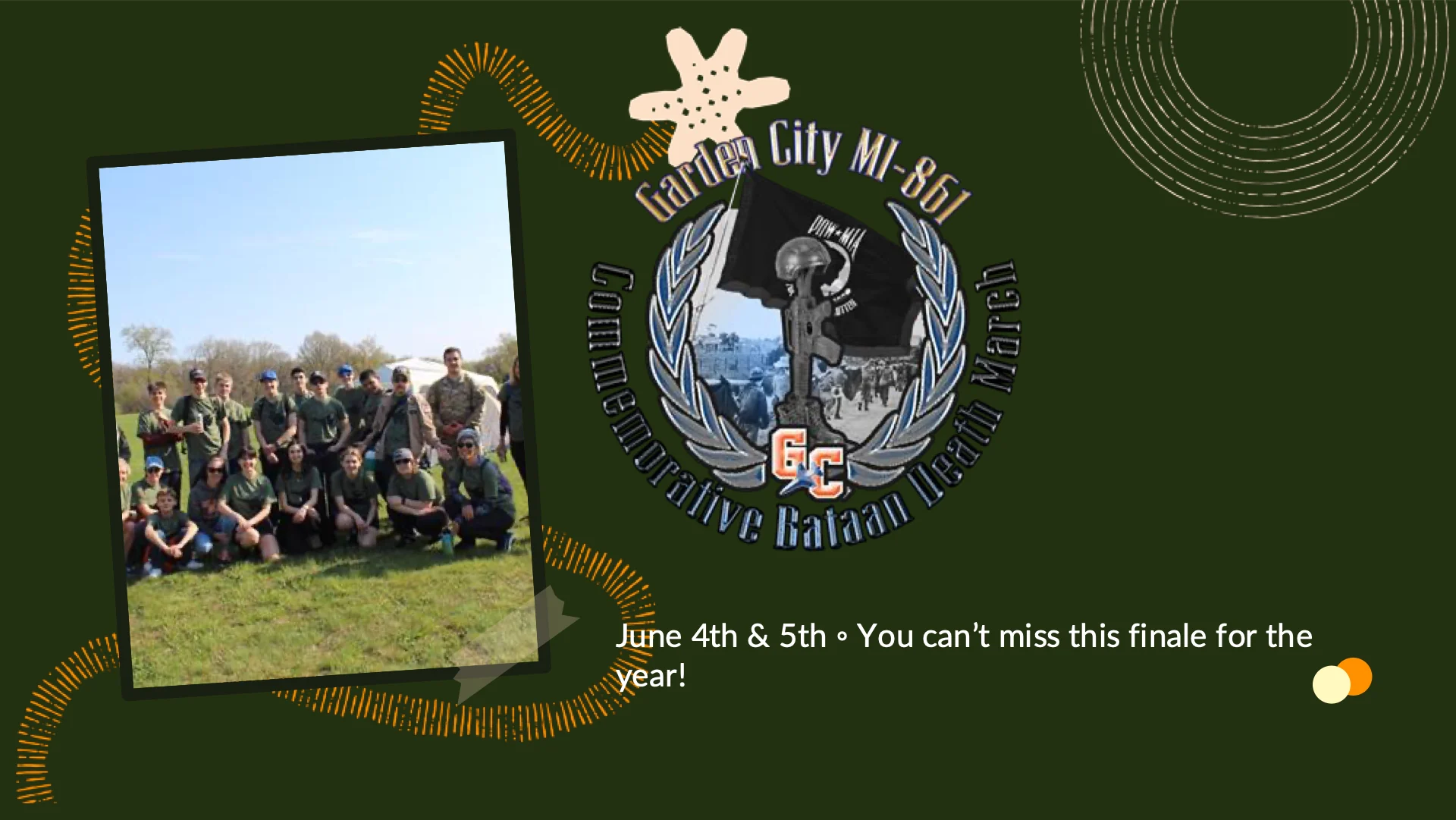
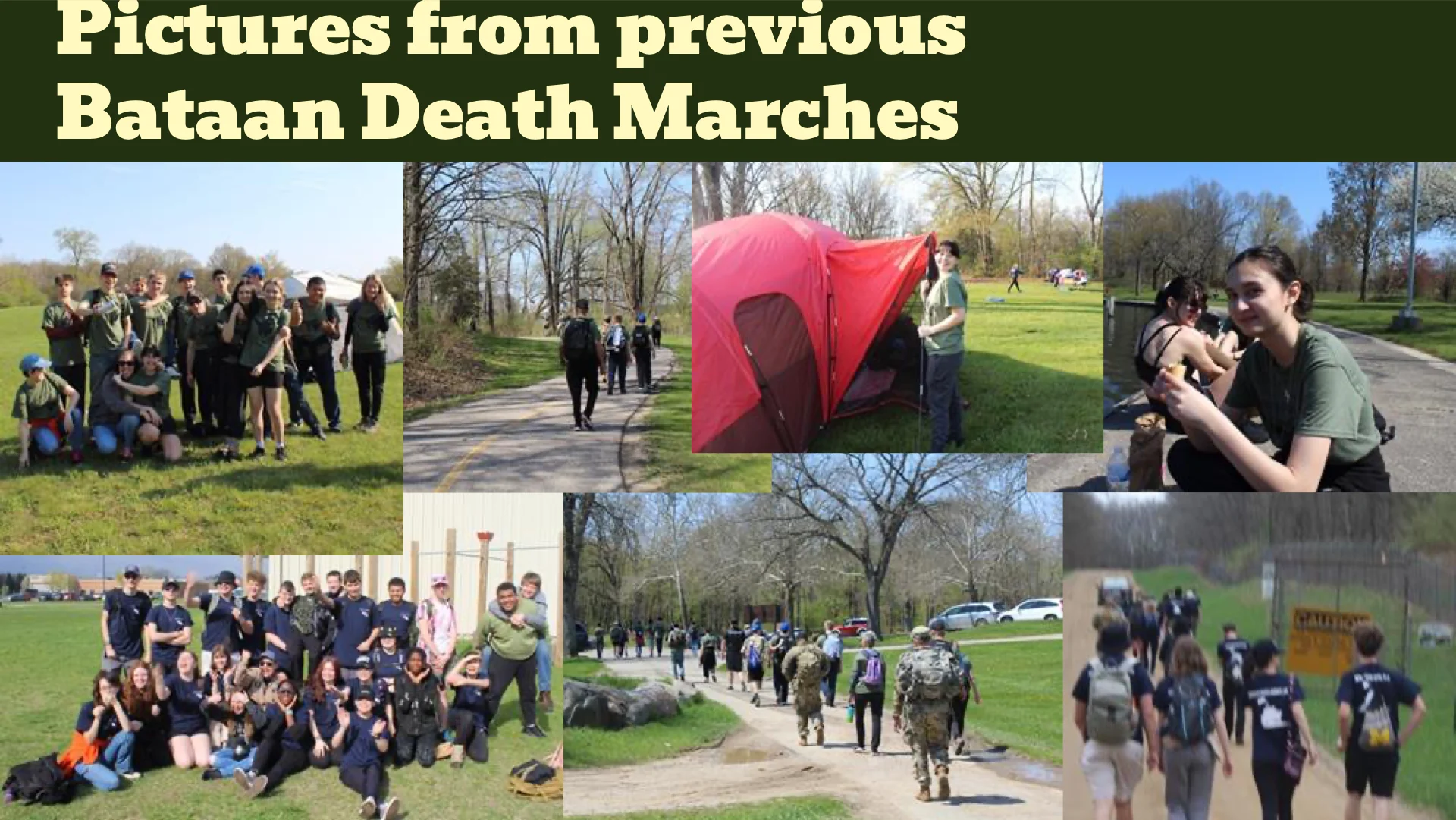
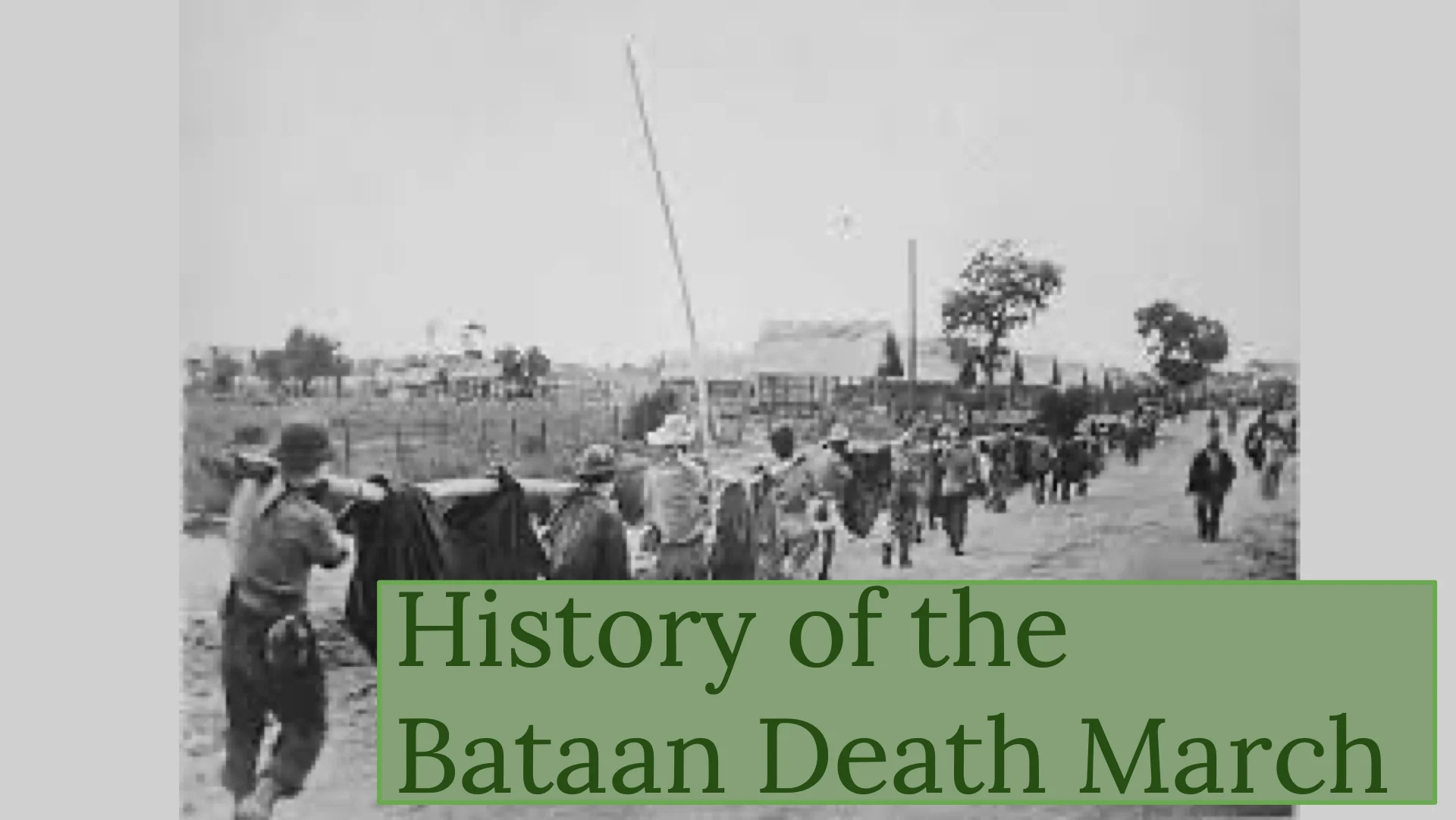
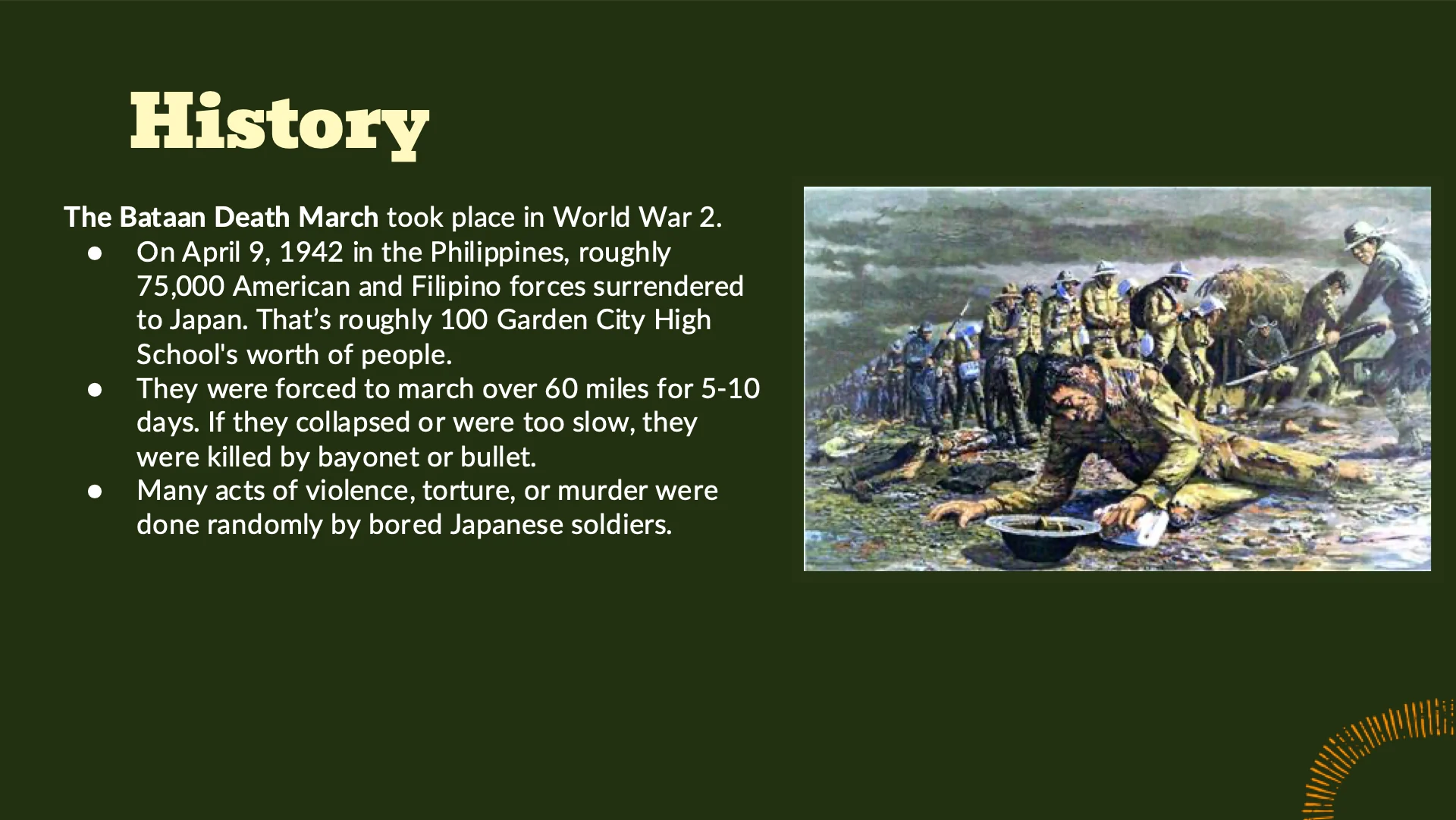
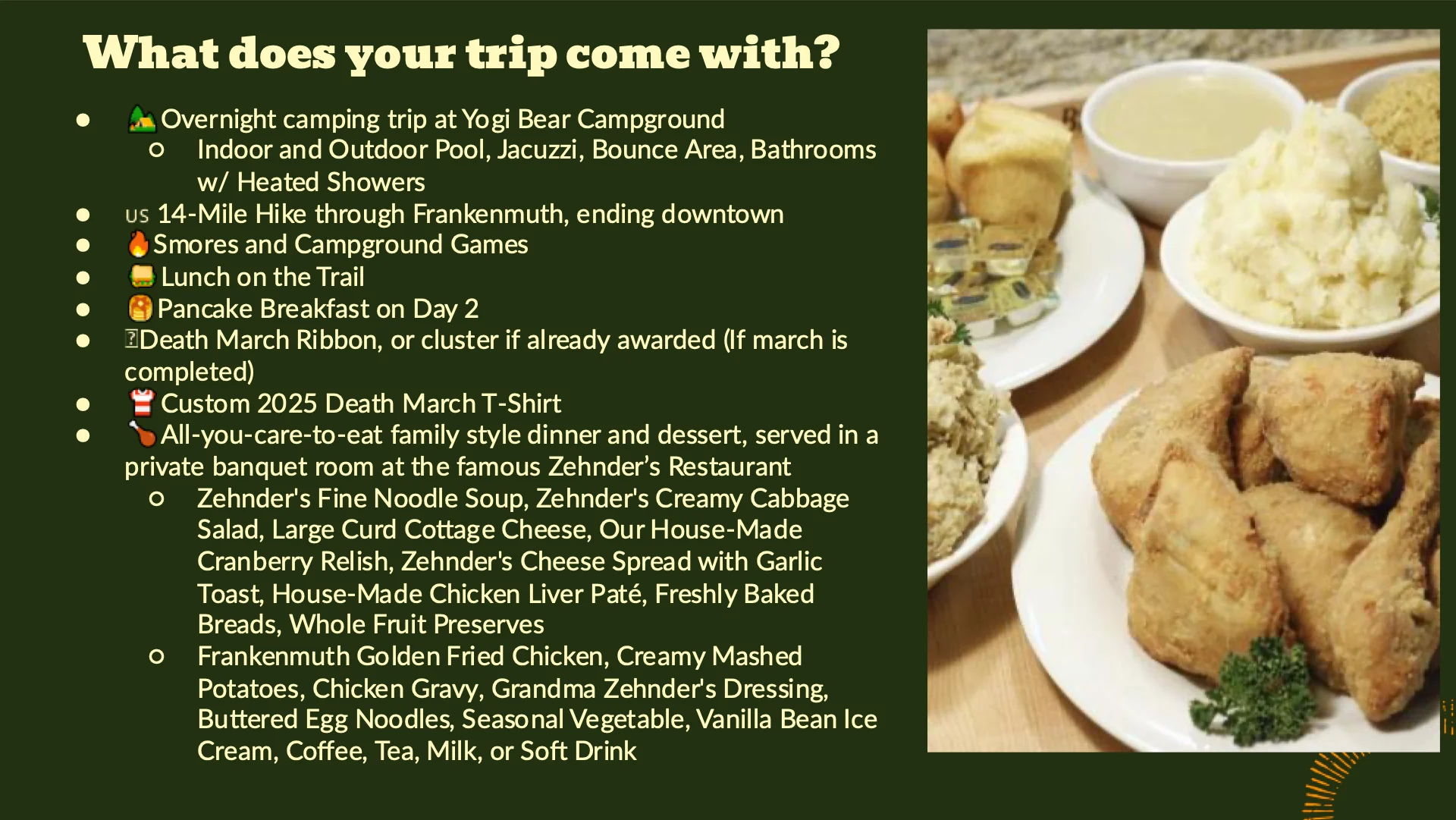
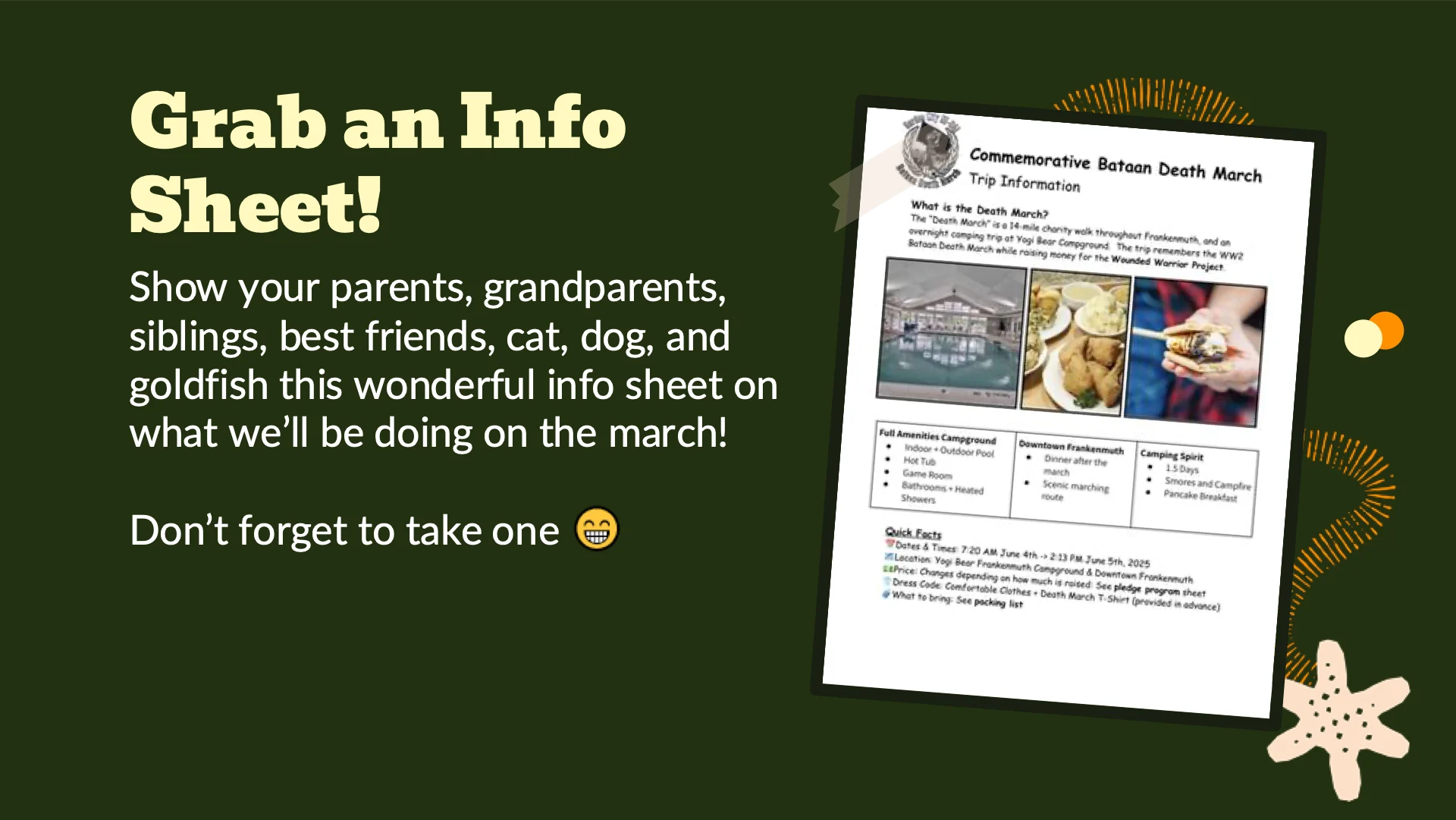
My final major project brought together many of the lessons I had learned: redesigning our unit’s commemorative Bataan Death March hike. The event honored the American and Filipino prisoners of war subjected to a brutal forced march in the Philippines during World War II. Our unit marked that history through a fourteen-mile hike and an overnight camping trip.
The first version I attended, at Kensington Metropark, had been difficult in ways that distracted from its purpose. Cold rain, flooded tents, and limited facilities left many cadets discouraged. In feedback I collected afterward, I noted practical improvements such as clearer packing checklists and better restrooms. I also questioned calling walking groups “fast” and “slow,” recognizing how those labels could make participants feel. I asked that the lessons be recorded in a shared planning guide so future organizers could build on them. These details helped me see how an event’s organization affects whether people feel included and supported.
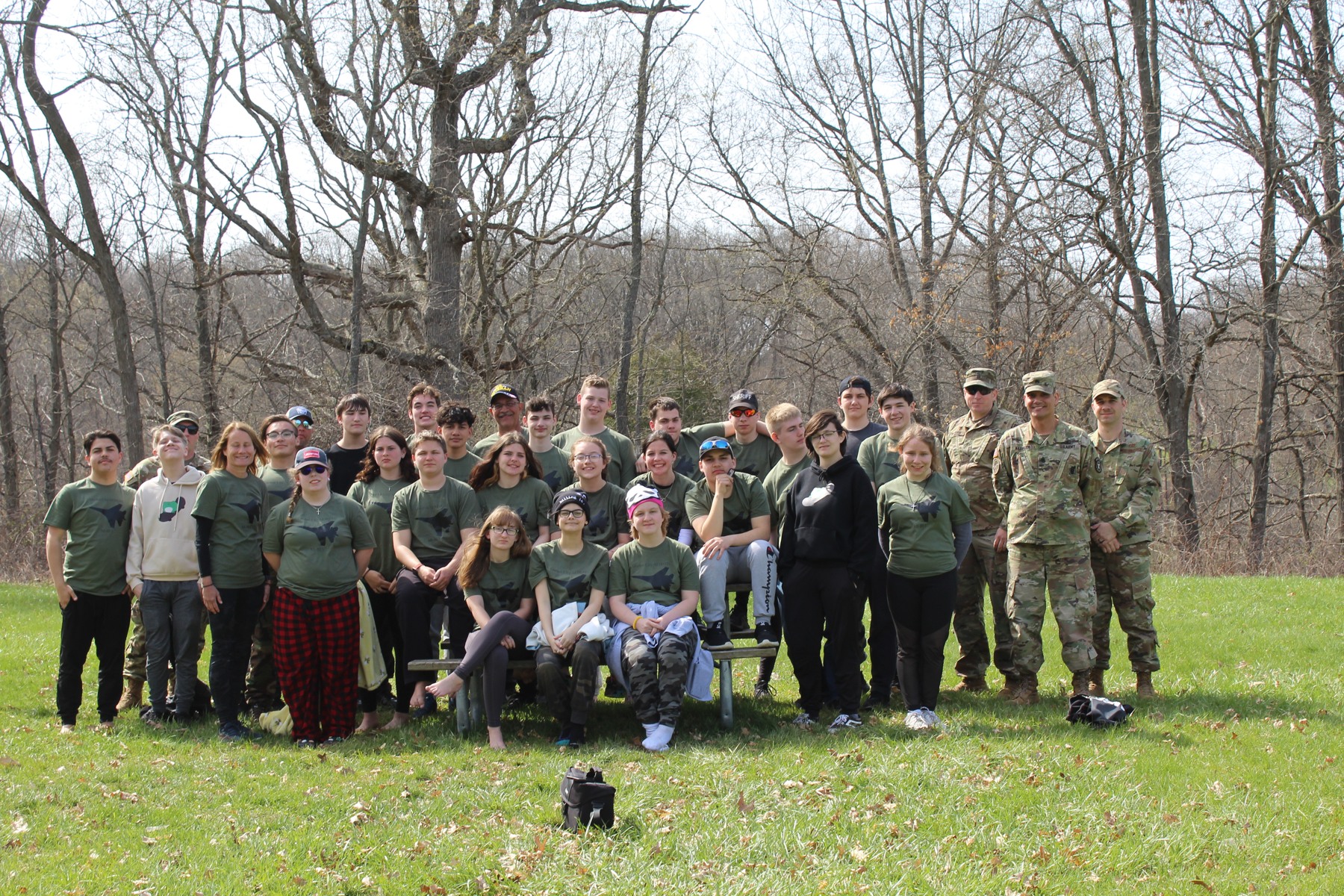
For my senior project, I wanted to preserve the challenge and commemorative purpose while creating an experience that high school students could appreciate. I proposed moving the event to Frankenmuth, where we could combine the hike with a family-friendly campground, reliable amenities, and time together afterward. I wanted cadets to leave with an appreciation for the history, pride in completing the walk, and a stronger connection to one another.
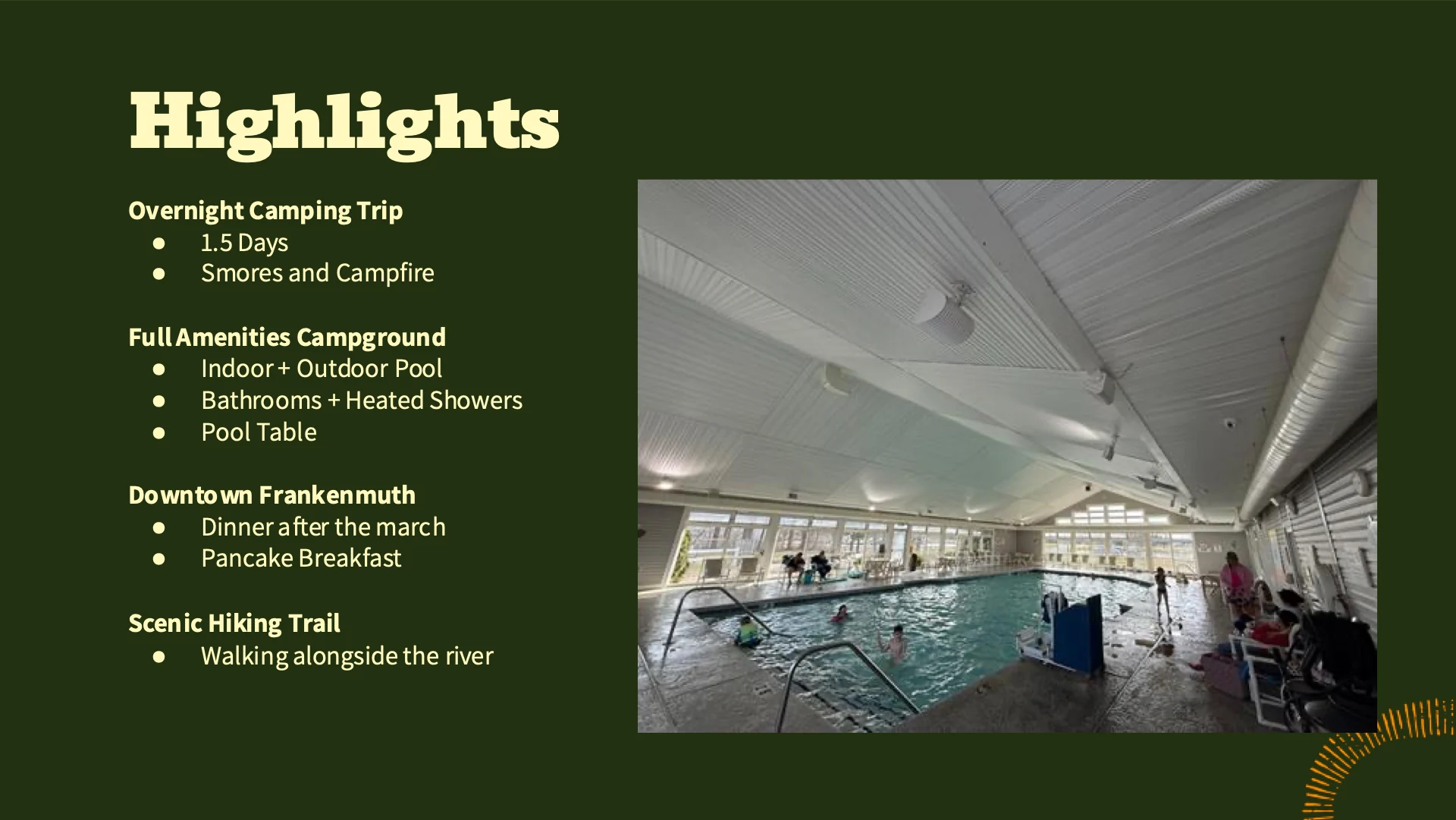
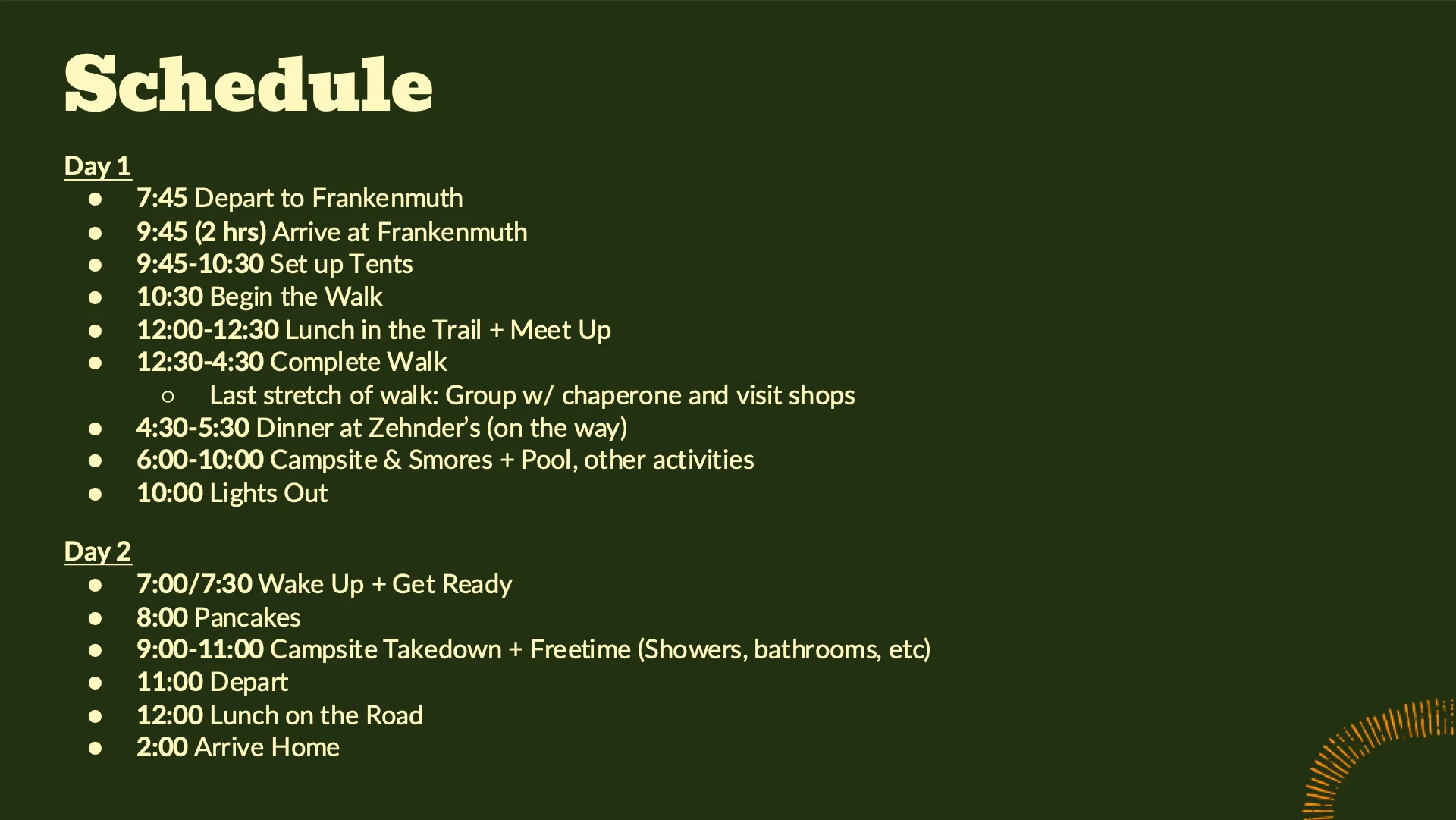
Making that idea work required sustained planning. I contacted the campground about a group discount and approached restaurants about accommodating us. Many requests weren't accepted at first, so I kept pursuing options and explaining the purpose of the event. On weekends, I traveled to Frankenmuth with my family to walk possible routes and map the trip. I compared itineraries that balanced the hike, transportation, dinner, and campground activities. The final plan incorporated downtown into the route, with dinner at Zehnder’s before returning to camp.
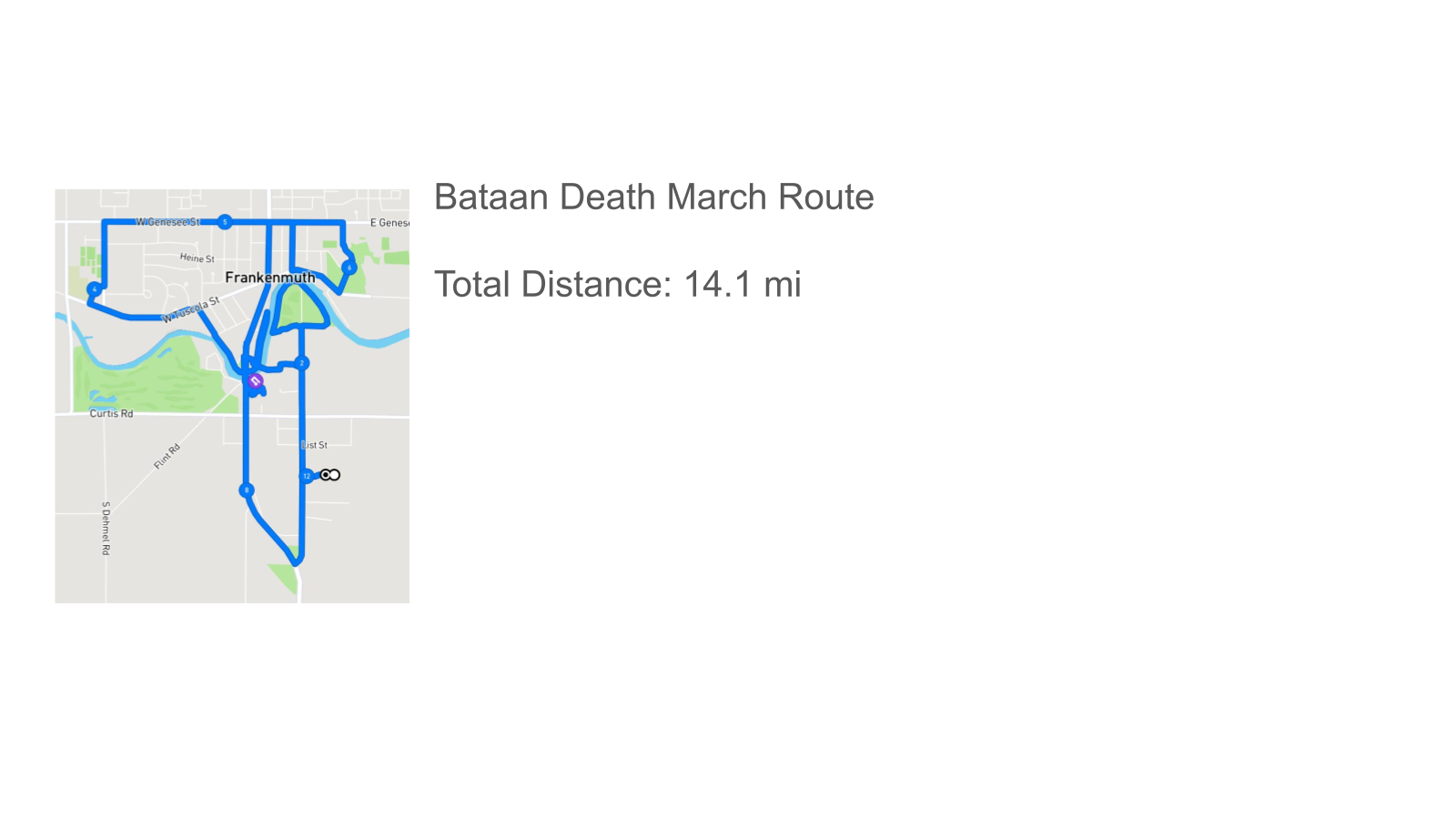
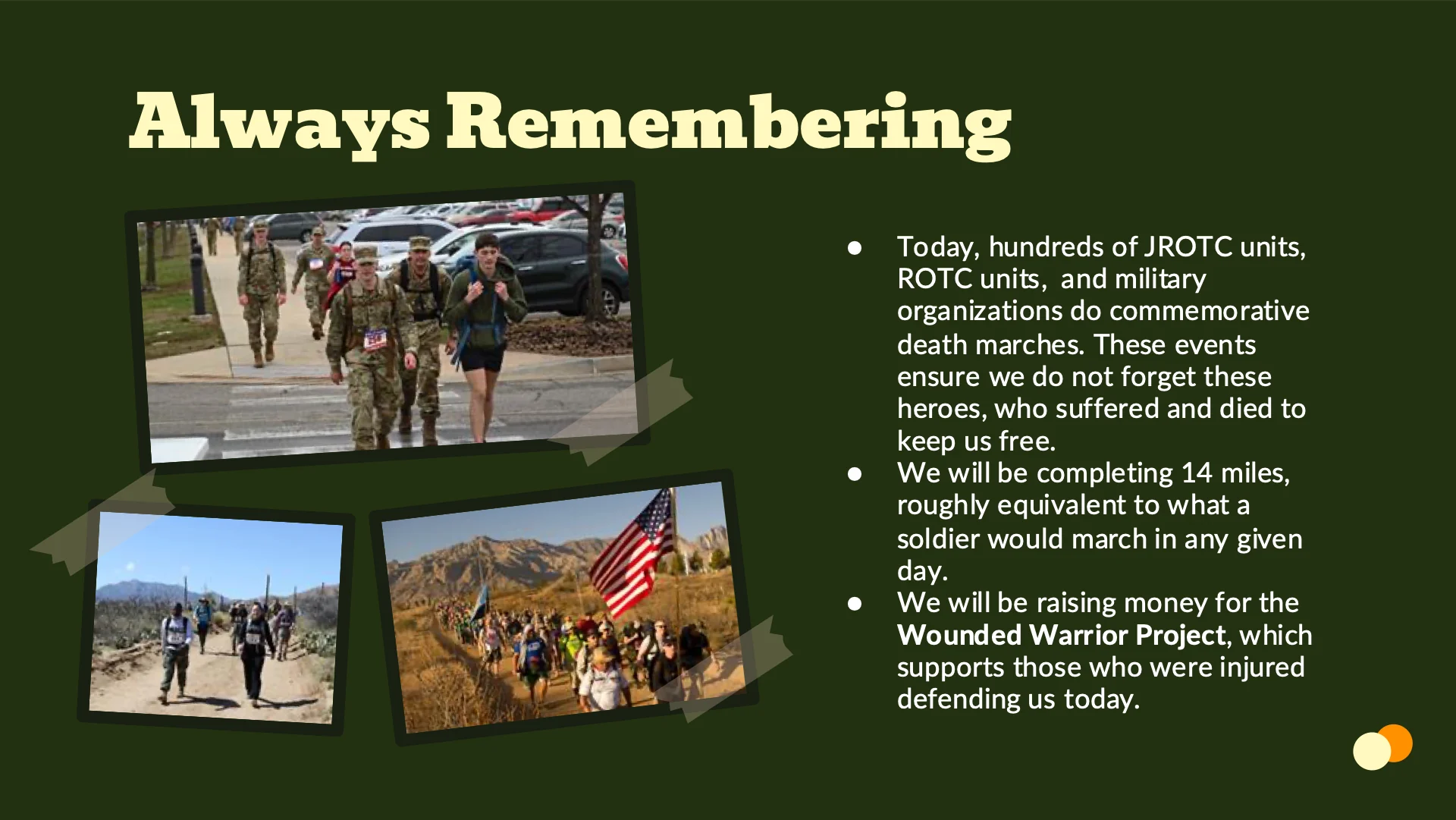
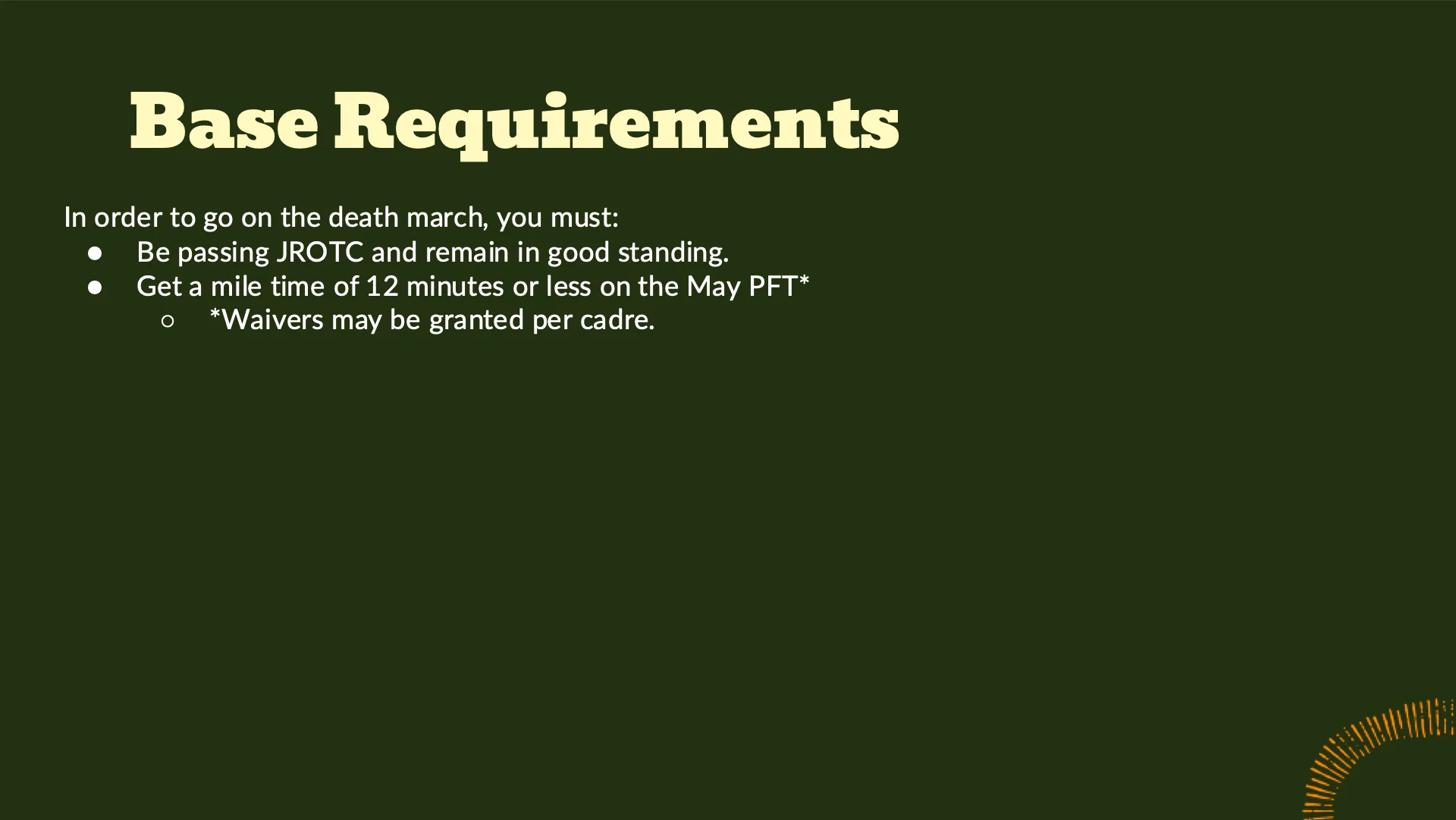
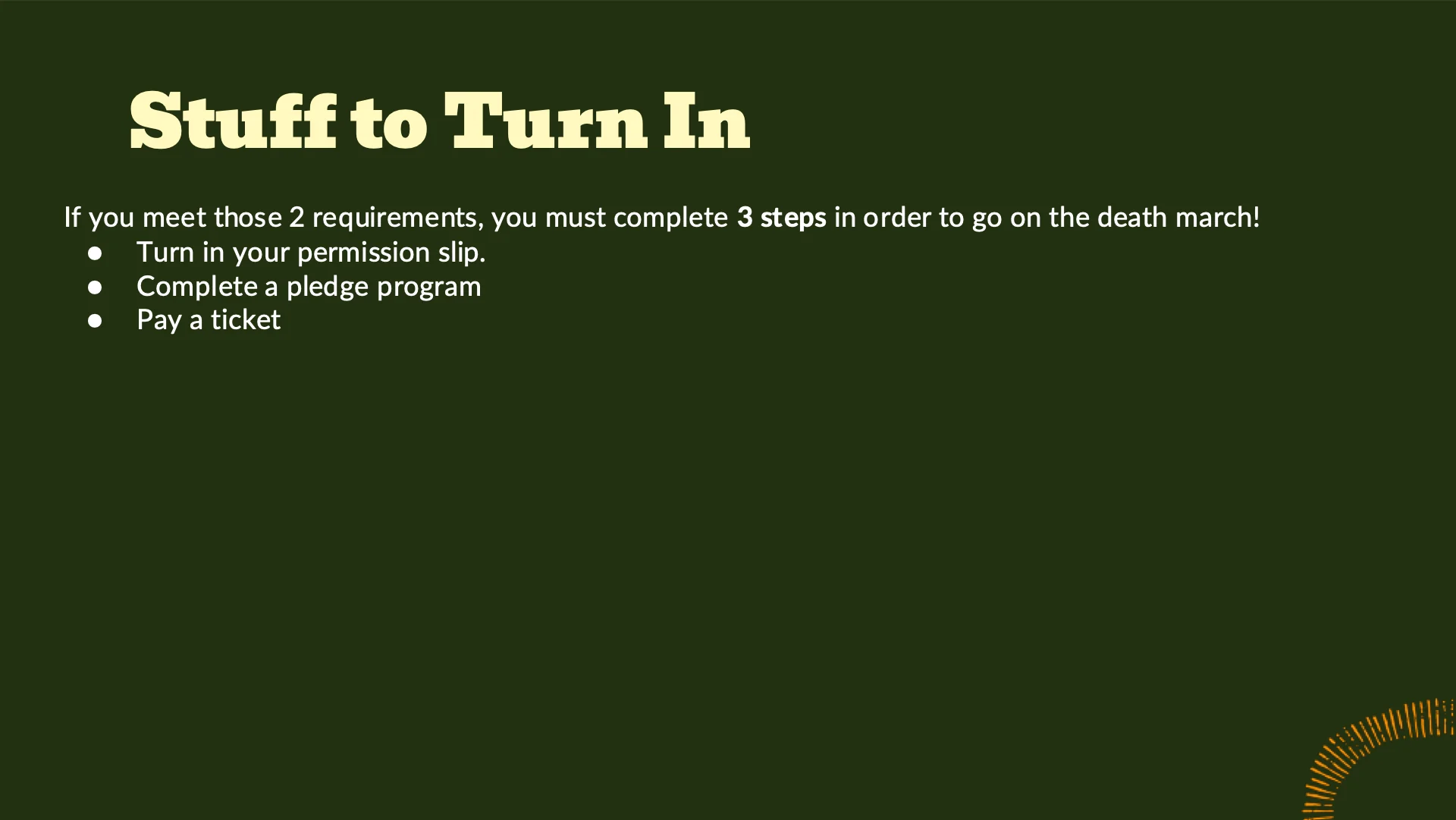
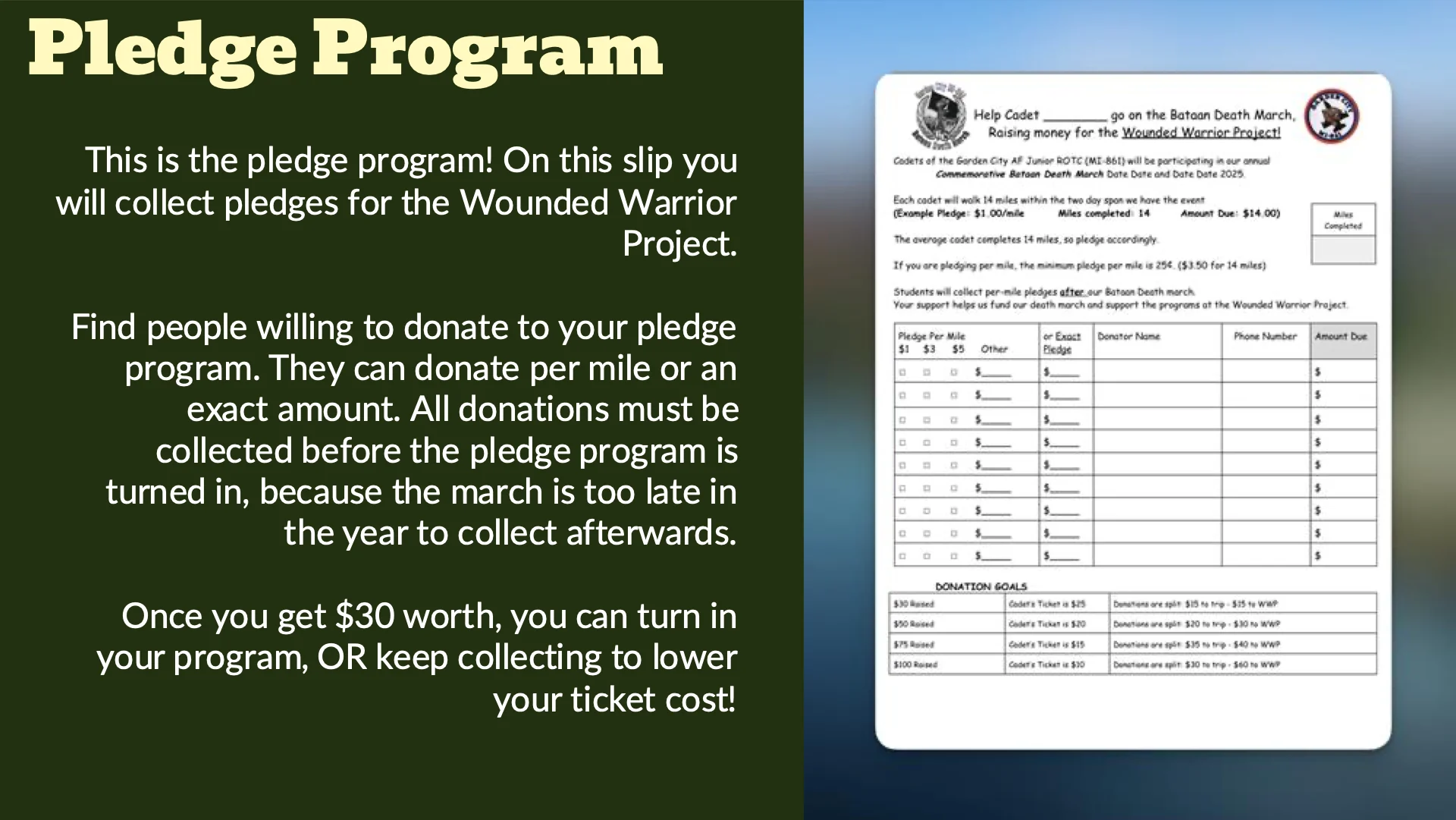
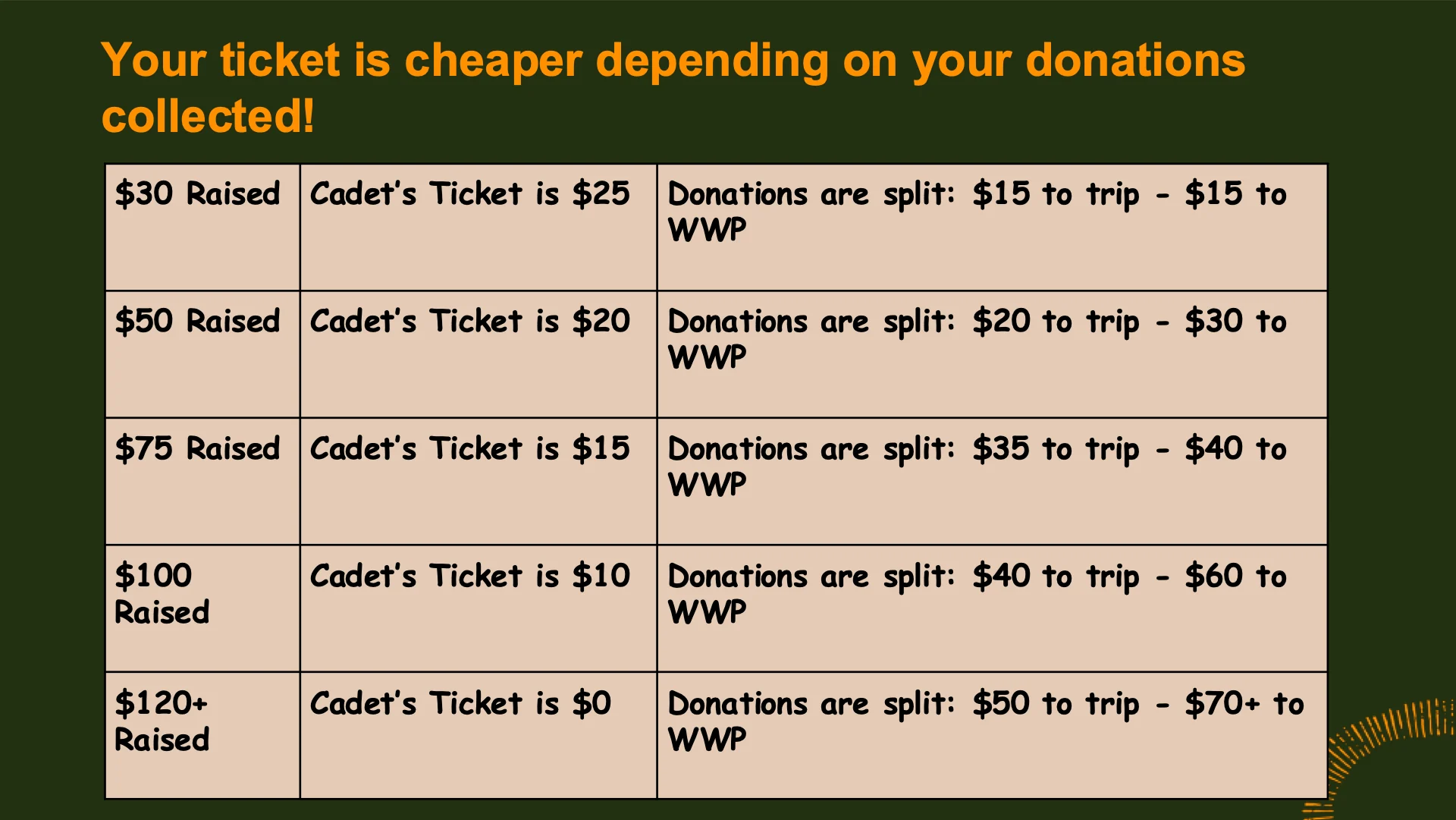
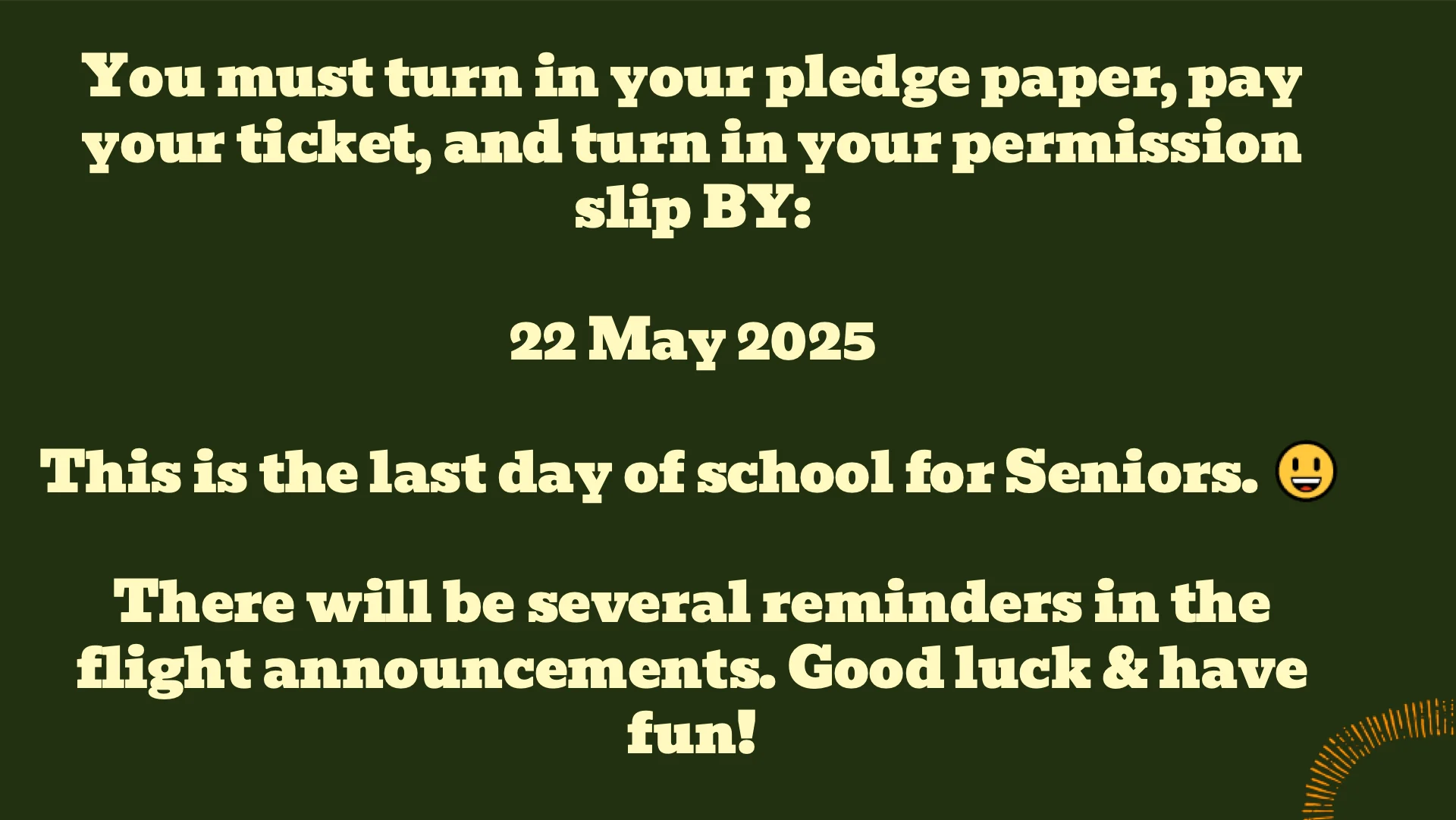
Before the trip, I briefed the corps on the history we were commemorating, the Frankenmuth schedule, and how the pledge program would cover costs while supporting the Wounded Warrior Project. You can step through that exact briefing below.
Bataan Death March
1 / 16
Use the arrows, dots, or ← → keys. Press F for fullscreen.
I used a pledge program that supported both participation costs and the Wounded Warrior Project. Donations could help reduce a cadet’s ticket price while contributing to the charity. That made fundraising part of a broader effort to make the trip accessible. I reached out through relationships we had developed over years of community service, inviting school staff, service members, and Air National Guard personnel to participate. The event became a way to bring our corps and its wider community together.
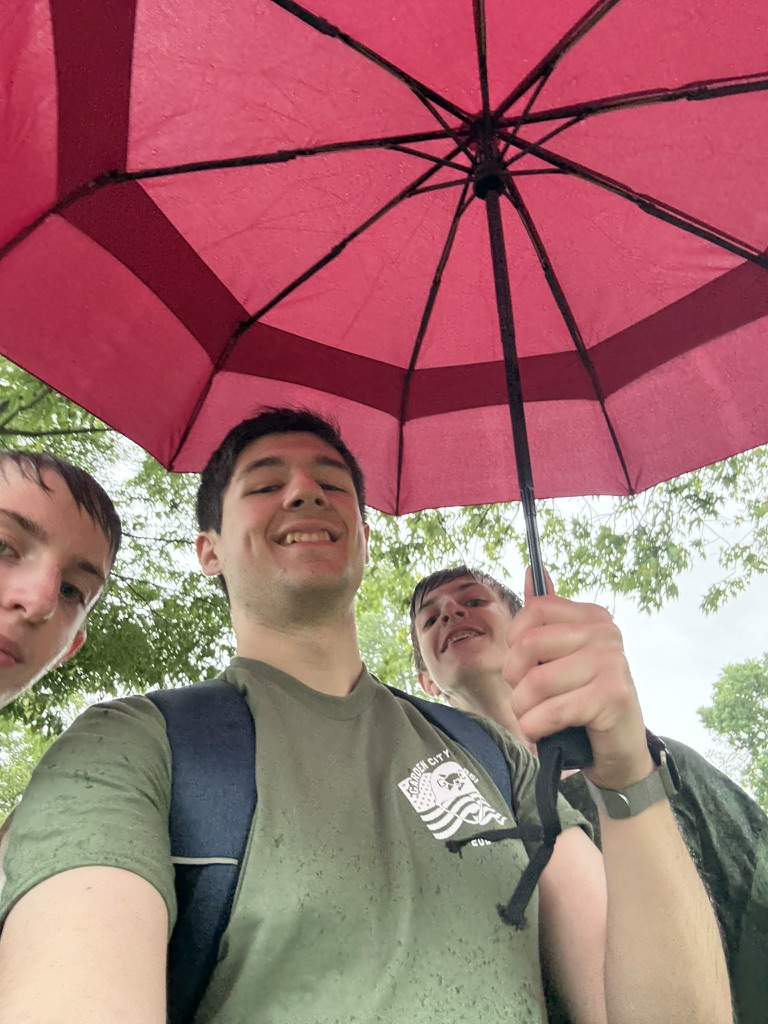
When the day arrived, it poured. Despite all the planning, we could not control the weather. This time, however, the cadets approached the rain as a challenge they could work through. They completed the hike with a shared meal, time to explore Frankenmuth, and activities at the campground ahead of them. The feedback was enthusiastic. We had raised money for the Wounded Warrior Project, honored a difficult chapter of history, and created an experience that students wanted to be part of.
That project changed how I understood motivation. The physical challenge remained demanding, but the support surrounding it helped cadets stay engaged. Listening to their earlier experience had made the event stronger. I learned to consider how the practical details of a plan—facilities, schedules, communication, costs, and opportunities to connect—work together to shape the way people experience it.
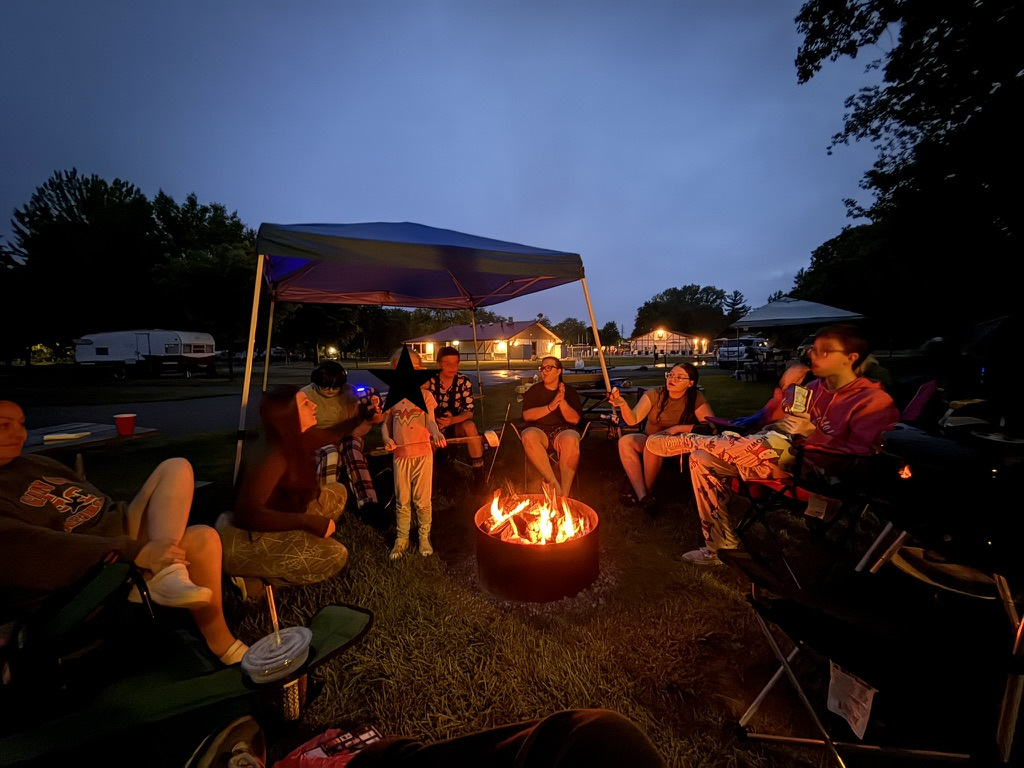
Graduation did not quite end the work. I had coordinated another wreath-laying for that summer, and on May 24 I came back to the unit as those plans took shape.
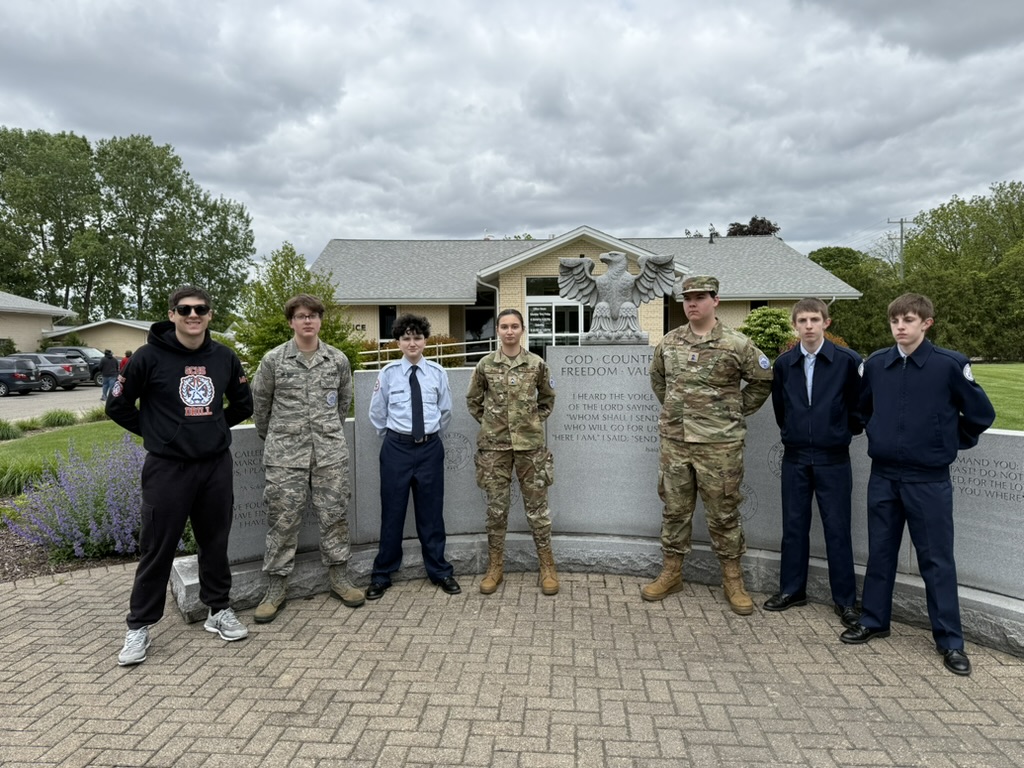
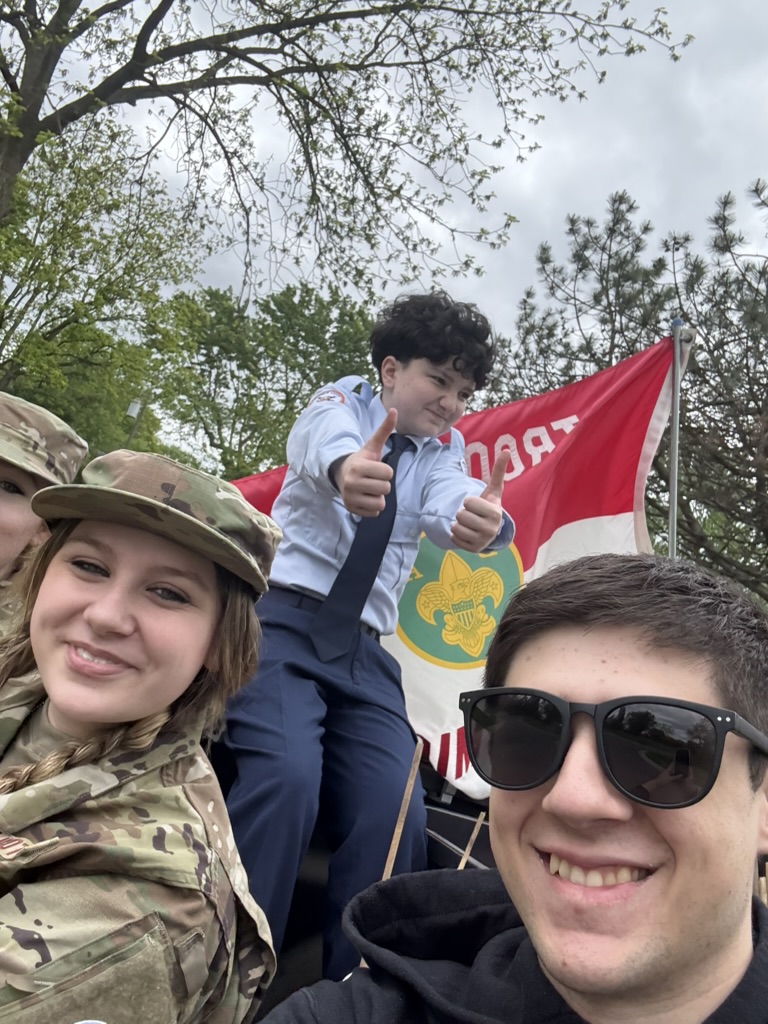
JROTC gave me repeated opportunities to practice communication, empathy, teamwork, and leadership with real responsibility for other people. I learned to handle disagreements, adapt when plans met resistance, and give volunteers a reason to keep contributing. I also learned to prepare others to take ownership and to leave behind information they could use. As I continue my professional journey at the University of Michigan, I carry those habits into the teams I join. I entered JROTC hoping to find a place for myself; I left understanding how much I valued helping others find purpose and opportunity within a community.
Challenge Coins
I made several challenge coins when I was in the JROTC program, each to serve as an award given by its respective position. Every one has a unique meaning, based on the corps’ history and that position’s responsibilities.
Corps Commander
Front
One thick bar marks the corps commander, the highest cadet position. It follows the highest cadet officer ranks, whose chevrons are double thickness. Garden City’s cougar stands between the letters G and C, with an eagle above it and a lamp below. The blank plate is for the number of coins given out before the recipient, so each coin is unique.